-
Recent Posts
Recent Comments
grenotek on … kaykay on … Archives
- March 2025
- August 2024
- July 2024
- April 2024
- March 2024
- February 2024
- October 2017
- June 2017
- May 2017
- April 2017
- March 2017
- February 2017
- January 2017
- July 2016
- March 2016
- February 2016
- January 2016
- July 2015
- June 2015
- February 2015
- January 2015
- December 2014
- September 2014
- April 2014
- March 2014
- June 2013
- May 2013
- August 2011
Categories
Meta
Heavy Machinery hazards on Construction Sites
Every year heavy equipment operators, ground workers and pedestrians are injured or killed by heavy mobile equipment used in construction. Many of these incidents are the result of rollovers or by individuals being struck or crushed by equipment. In fact, “struck-by” deaths are one of the construction industry’s “Fatal Four” leading causes of death on the job site—of which 75% involve heavy equipment.1
Several conditions can contribute to struck-by injuries and fatalities, including:
- Falling materials and loads.
- Equipment operator blind spots.
- An operator dismounting and leaving equipment in gear, or not setting the brakes or wheel chocks.
- Equipment tip-over or rollover.
- Equipment or controls not locked out during maintenance.
Administrative Controls
While the best way to stay safe is to stay aware, contractors can help reduce the dangers and help minimize injuries and fatalities associated with heavy equipment by incorporating a few administrative controls at the job site.
Pre-Planning and Safe Work Practices
When pre-planning your project, consider these measures to help reduce the risk of injuries when working around and using heavy equipment:
- Use trained and, where required, certified equipment operators and spotters.
- Provide heavy equipment hazard awareness and safe work practices training to workers.
- Provide a copy of/access to the operating manual for machinery to the operator.
- Develop a path site plan for vehicles, heavy trucks and deliveries to help avoid or limit vehicles and equipment backing up.
- Set up a limited-access zone or swing radius around heavy equipment.
- Provide equipment with rollover protective structure (ROPS).
- Maintain equipment to be in good operating condition.
- Before any equipment maintenance is performed, utilize lockout/tagout procedures.
- Provide a cab shield or canopy worker protection for top-loading vehicles.
- Increase visibility and lighting for night work.
Spotters
Worker visibility and visual and verbal communication play an important role in ongoing safe operations. Blind spots can be a significant operator issue. A spotter, trained in hand signals, can help provide safety guidance and communication between the operator, workers and nearby pedestrians to compensate for blind spots.
Spotters should wear high-visibility clothing and stand clear of equipment so they are visible to the operator at all times.
Operator Safe Work Practices
In addition to being trained and familiar with the equipment being operated, operators can help reduce the risk of injury or fatality associated with heavy equipment through safe practices.
- Be familiar with the equipment and the operator’s manual.
- Inspect the equipment at the start of each shift, including the brake system, headlights, taillights, brake lights, windshield wipers and audible warning devices, such as the horn and the back-up alarm.
- Adjust all side and back mirrors to help compensate for blind spots.
- Ensure workers are clear of equipment before operating.
- Acknowledge and allow safe passage to workers who alert you that they are approaching.
- Avoid operating equipment parallel to slopes or embankments.
- Turn off the engine and engage brakes before leaving equipment.
- Face the equipment, maintaining three points of contact, while getting on and off the equipment.
- Always wear the seat belt.
- Avoid overloading vehicles.
- Top loading vehicles must have cab shields and canopy protection.
Additional risks can include contact with overhead energized utility lines by mobile cranes and poor ground conditions.
Article credit : travelers.com
Posted in Uncategorized
Leave a comment
Avoiding Electrocution on Construction Sites
The Occupational Safety & Health Administration (OSHA) list four main construction site accidents as :
Falls
Struck by object
Caught in or between collapsing structures
Electrocutions

credit : Shutterstock
Of these four, electrocutions are among the most common to occur on construction sites. This might be due to working with poor electrical equipment, working and using electrical equipment under bad/wet weather that are prevalent.Despite this, construction worksite injuries due to electrocutions can be easily avoided.
Injuries from electrocution have been categorized by the acronym “be safe”
B – Burns
E – Electrocution
S – Shock
A – Arc Flash/Arc Blast
F – Fire
E – Explosions
Electrical accidents that usually occur on the sites are often termed as electrical shocks by the victims.
What causes electrical shock? Shock happens when a body completes an electrical circuit. For example, a worker who allows an aluminum ladder to brush against power lines will cause electricity to enter the body and exit through a ground path. In incidents reporting,we classify all shocks as electrocution. This is because no magnitude of electrical power is underestimated.Any magnitude of electrical shock can cause death.It is a matter of several factors such as duration and magnitude.Death from electrocution is often caused by the stoppage of the heart. The amount of voltage that causes death varies from case to case. Most electrical circuits used in workplace labor carry between 15 to 20 amperes of current, which is 300 times the amount needed to cause death.
The aim of the employer should be the protection of workers on the construction site.
There are three common sources of electrical injuries. Often It’s either improper use of cords (extension or flexible), contact with overhead power lines, or contact with other energized sources.
It is advisable that tools, equipment, and wiring being maintained properly . Some workers who use electrical equipment do not have the right required training.
It is imperative for site bosses and company owners to make sure all workers and contractors are properly trained in the use of electrical equipment and are aware of all safety measures. Equipment should be kept in proper working order and repair. It’s less expensive in the long run to purchase new equipment than to pay out increased worker’s compensation premiums. Make sure everything is properly powered and grounded, whether it’s permanent or temporary equipment.
Most accidents in the workplace can be prevented by being careful, being aware, and not cutting corners. Construction work of all types is among the most dangerous in the country.It is imperative that every one undertaking electrical maintenance job is responsible for ensuring that the power source is cut out and he/she is the only commander of the power source.
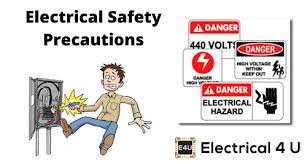
Tags should also be applied to any restricted electrical source or equipment. The tag must clearly explain expected procedures and who has the authority to remove the tag to access the energy source of equipment.
Credit: Shutterstock
All electrical equipment should be properly grounded.All tools and equipment should be inspected for use, as well as power or extension cords. Wear-and-tear happens, but remove them from service when they’re damaged. If a plug is missing a ground pin, for example, do not wait to replace it.
Do not work with electrical equipment around wet areas or if that equipment is wet.
When using live electrical circuits or parts, keep metal objects away from contact. Outside metal can short out the equipment or even cause an explosion. If possible, use non-conductive tools.
Be aware of all power lines and maintain a safe distance from them. Do not store tools or equipment near power lines or sources.
Any electrical equipment that isn’t in use or being serviced should be unplugged.
Use and store equipment properly. Don’t yank on cords, switch off tools before unplugging them, store in dry places, report damaged equipment immediately, etc. Deplete built-up energy by grounding or bleeding.
Posted in Uncategorized
Leave a comment
Using ladders safely on construction site.

credit: The safeguard group
Falls from elevated surfaces are frequently listed as
most common causes of major accidents in the
construction industry in Ghana. Most of these accidents
occur due to workers not following basic ladder safety. In this article, I will list some important keynotes to enduring safe use of ladders on construction sites.To help prevent ladder injuries on the jobsite, practice the following safety tips.
Setting up Safely
Make sure you select the correct ladder for the job –
check the length and duty rating. Proper length is a
minimum of three feet extending over the roofline or
working surface.
Inspect your ladder before each use for loose or
damaged parts, such as the following:
• Steps
• Rungs
• Spreaders
• Rung dogs
• Safety feet
• Other parts
Clear the area where you will be working. Never place
a ladder in front of a door that isn’t locked, blocked or
guarded.
Because metal ladders conduct electricity, use a
wooden or fiberglass ladder near power lines or
electrical equipment.
Check that all locks on extension ladders are properly
engaged before placing your ladder on a steady
surface. The ground underneath the ladder should
be level and firm. Large, flat wooden boards braced
underneath a ladder can help level it on an uneven
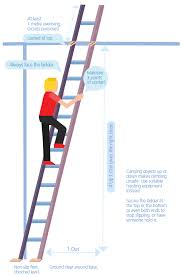
surface or soft ground. Straight, single or extension
ladders should be set up at approximately a 75
degree angle.
Use the 1:4 ratio to ensure your safety when on a
ladder. Place the base of the ladder one foot away
from whatever it’s leaning against for every four feet
of height up to the point of contact for the top of the
ladder.
Credit: Safe work SA
Use Caution
Always use caution when using a ladder at your
construction site, and never use a ladder for any other
purpose than intended.
Other safety considerations include the following:
• Make sure the weight that your ladder is
supporting does not exceed its maximum load
rating (user plus materials). Only one person
should be on a ladder at a time.
• Keep your body centered between the rails of
the ladder at all times. Do not lean too far to the
side while working. Never overreach—instead,
descend from the ladder and move it to a better
position.
• Do not step on the top step, bucket shelf or
attempt to climb or stand on the rear section of a
stepladder.
Credit: Safety first consulting Toronto
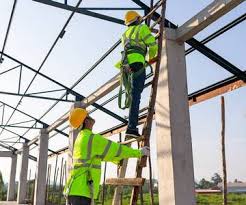
• Always face the ladder when climbing up or
down. Never leave a raised ladder unattended.
• Slowly step down from a ladder if you feel dizzy
or tired.
• Non-slip footwear should be worn at all times
when on a ladder at a construction site.
Minimize ladder accidents by adhering to these safety
and prevention tips.
By implementing these preventive measures and promoting a culture of safety awareness and compliance, construction workers can significantly reduce the risk of falls from ladders and ensure a safe working environment on construction sites.
Posted in Uncategorized
Leave a comment
What are the top 10 construction site safety issues?
There are several Safety concerns for every Manager on the construction site. Safety issues on construction sites can vary depending on the nature of the project, site conditions, and specific hazards present. However, I would like to list with examples some common safety issues that are common on construction sites include:
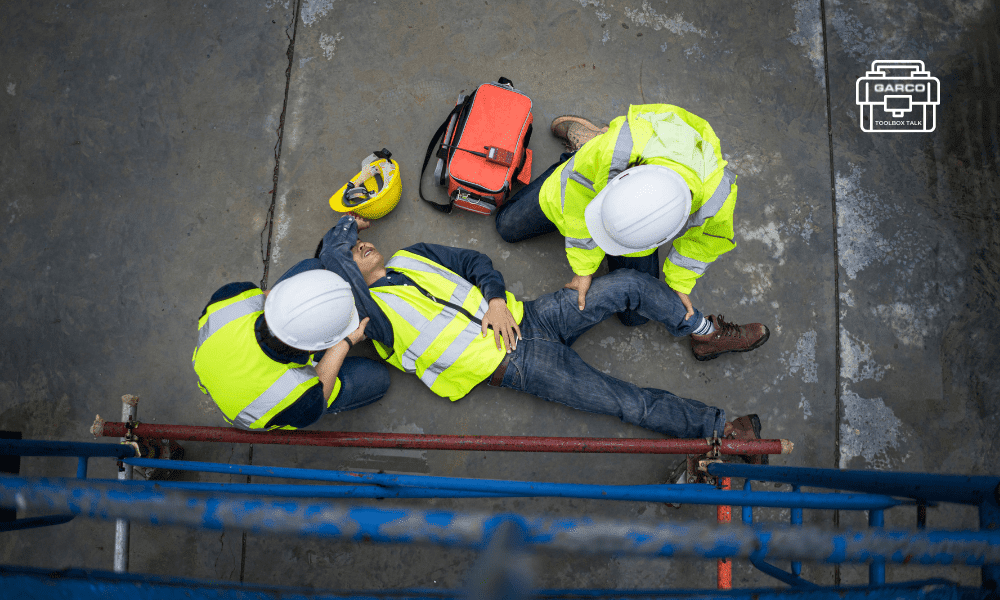
Credit: cargo construction
Fall Hazards: Falls from height’s, such as roofs, scaffolding, ladders, and elevated work platforms, are a leading cause of injuries and fatalities on construction sites.
Electrical Hazards: Exposure to live wires, faulty wiring, and improperly grounded electrical equipment can result in electrocution, burns, and other serious injuries.
Struck-by Accidents: Workers may be struck by moving vehicles, falling objects, or equipment such as cranes, forklifts, or heavy machinery, leading to severe injuries or fatalities.
Caught-in or Between Hazards: Workers can become caught in or between equipment, machinery, or structural components, resulting in crushing injuries, amputations, or suffocation.
Trenching and Excavation Hazards: Workers involved in trenching and excavation activities are at risk of cave-ins, engulfment, and suffocation due to the unstable nature of soil and lack of protective systems.
Unsafe Use of Tools and Equipment: Improper use, maintenance, or lack of training on tools and equipment can lead to accidents, including cuts, lacerations, amputations, and crush injuries.
Hazardous Materials Exposure: Exposure to hazardous materials such as asbestos, lead, silica, and chemicals used in construction processes can cause respiratory problems, skin irritation, cancer, and other long-term health effects.
Poor Housekeeping and Site Management: Cluttered work areas, inadequate storage of materials, and improper waste disposal can create tripping hazards, fire risks, and impede emergency response efforts.
Inadequate Personal Protective Equipment (PPE): Failure to provide or use appropriate PPE, such as hard hats, safety glasses, gloves, hearing protection, and high-visibility clothing, increases the risk of injuries from various hazards.
Lack of Safety Training and Supervision: Insufficient training, supervision, and communication of safety procedures and protocols can result in workers being unaware of potential hazards or how to mitigate risks effectively.
Addressing these safety issues requires a proactive approach to hazard identification, risk assessment, implementation of safety controls, ongoing training and education, regular inspections, and effective communication among all stakeholders involved in construction projects. Employers, workers, and regulatory agencies must collaborate to promote a culture of safety and ensure that construction sites are safe and healthy environments for all workers.
Posted in Uncategorized
Leave a comment
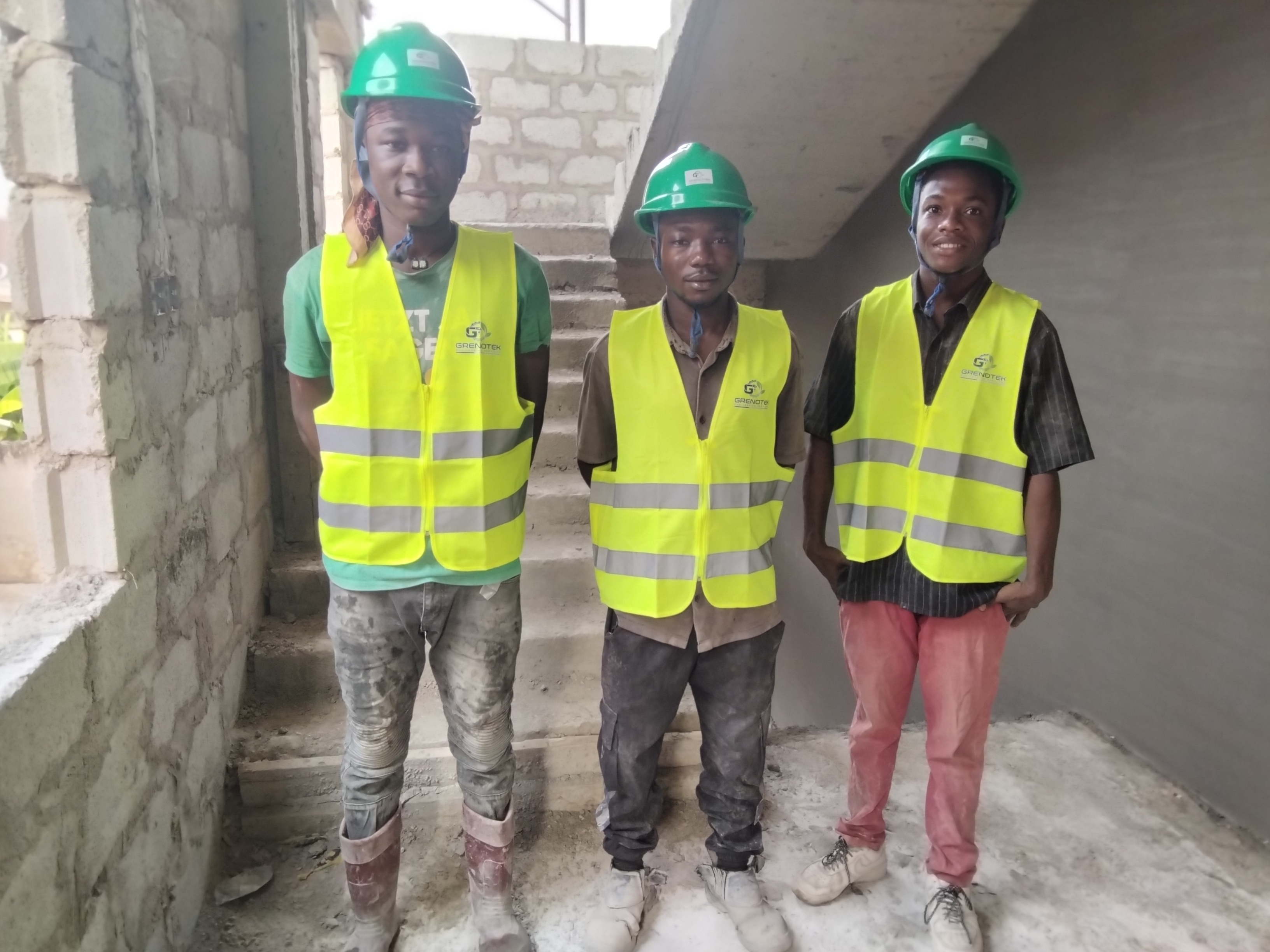
New workers Safety orientation
A health and Safety induction was conducted for new workers joining our construction workforce today. Congratulations to the new workers. Go Quality,Go Green, Go Safety

Posted in Uncategorized
Leave a comment
Why Ghana has yet to pass the Occupational health and Safety bill?
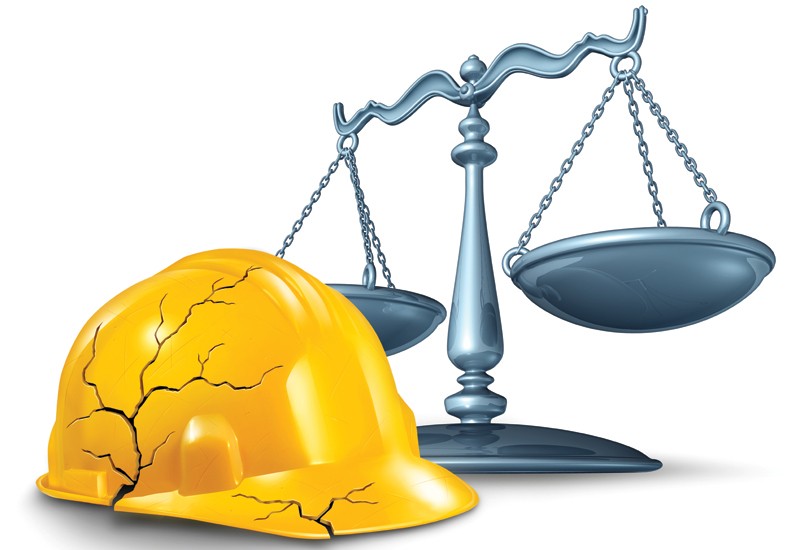
In the year 2022, the Ghana Employers Association (GEA) made several calls on the government to pass the Occupational Safety and Health (OSH) bill into law to harmonise all safety and health issues at the workplace.
Many other health and safety oriented organizations have equally echoed this voice on several platforms to creat awareness on the need for the bill to be passed into law.
The bill has been in parliament since the last 3 decades.

Credit : TUC,UK
The GEA said the bill was also to increase awareness on OSH to eliminate hazards or bring to the minimum, incidents on OSH at the workplace.
The OSH bill is aimed at improving working environment and conditions to maintain the working capacity of employees, prevent occupational accidents and diseases as well as eliminate other hazards from work.
Article 24(1) of the 1992 Constitution of Ghana states that, inter alia “Every person has the right to work under satisfactory, safe and healthy conditions”, this guarantee the safety, health and welfare of persons employed at workplaces in Ghana. Article 36(10) also states, “the State shall safeguard the health, safety and welfare of all persons in employment, and shall establish the basis for the full deployment of the creative potential of all Ghanaians”. These constitutional provisions mean that all persons working both in the formal and informal economies, including self-employed persons, are to be protected by ensuring that they work under safe conditions devoid of any adverse effects on their health. It behooves the government to ensure that the safety, health and wellbeing of persons at work are safeguarded in line with these constitutional provisions.
A petition on change.org started on May 6, 2020 has so far had only 2,504 signatures out of more than thirty million population who would benefit from the passing of this bill into law.Is this an indication that many Ghanaians are not interested in health and safety issues?
Well there are key factors that this article seems to summarize as causes of the political motivation in passing this bill into law.
Credit: Azaa Aleyev.
1. Priority of Legislation: The passage of bills depends on the legislative agenda and priorities of the government. If other legislative matters take precedence, the OHS Bill may be delayed in the legislative process.All government have not taken much interest in health and safety issues. The government takes a reactive approach to these matters. A typical example is the Bogoso explosion which affected over 3300 people,injured 59 and killed about 17 people. The government agency the mineral commission which is prudent in supervision of activities of mining industry launched a full scale investigation and imposing huge fines to the companies at fault. The government needs to take a more proactive duty of prevention of accidents as this through a more broader scope of occupational health and safety laws as compared to sectorial laws such as the mineral and mining regulations. The occupational health and safety law will broaden the scope of reporting,inspection and awareness of workers to empower them in acting to prevent such incidents.
Complexity and Controversy: Occupational health and safety legislation often involves complex issues and may be subject to debate and disagreement among stakeholders. Crafting comprehensive legislation that addresses the diverse needs of workers, employers, and regulatory agencies can be challenging and may lead to delays. Various sectors of the economy such as agriculture,mining, construction,health, financial all have individual operating procedures. It is important that critical analysis of various sectors actions,controls and guidelines in meeting these regulations are attainable. Passing a bill into law that is not actionable will lead to retirement and deterioration of the law. This is what many government agencies are still studying ie.the controversy of laws affecting the performance of some of these sectors.
Resource Constraints: Developing and implementing effective occupational health and safety regulations require adequate resources, including funding, technical expertise, and institutional capacity. Resource constraints may hinder the government’s ability to prioritize and enact OHS legislation. Indeed there are lots of human resources that are still not exploited in terms of supervision and monitoring of health and safety in Ghana. Passing this law will create mean creation of safety inspectorate officer positions at all levels of district,municipal and regional administrative offices as well as all government agencies. Is the government ready to absorb these workers on its public pay roll? A law is only non functional if there is no monitoring and supervision of the in actions and poor actions causing a crime.
The government therefore may not be willing to immediately pass into law such bills that have a potential cost impact on its purse.
Lobbying and Opposition: Certain industries or interest groups may oppose stringent OHS regulations due to concerns about potential costs, compliance burdens, or impacts on business operations. Lobbying efforts and opposition from influential stakeholders can influence the legislative process and delay the passage of OHS legislation.
Administrative and Institutional Challenges: Establishing the necessary administrative structures and institutional frameworks for implementing and enforcing OHS regulations can be complex. Delays in addressing administrative and institutional challenges may hinder the progress of OHS legislation.
Capacity Building and Awareness: Enhancing awareness of occupational health and safety issues and building capacity among employers, workers, and regulatory agencies are essential for effective OHS regulation. Delays in capacity-building efforts and awareness-raising initiatives may contribute to delays in passing OHS legislation.
It’s important for stakeholders, including government agencies, employers, workers’ organizations, and civil society groups, to collaborate and advocate for the passage of comprehensive OHS legislation that protects the health and safety of workers in Ghana. Continued efforts to raise awareness, build consensus, and address barriers to legislative progress can help advance the agenda for occupational health and safety reform.
Posted in Uncategorized
Leave a comment
Safety Officers needed for immediate employment.
Are you a safety practitioner looking for a position as a safety officer/manager in a construction firm in Ghana?

KEY RESPONSIBILITIES
Conduct regular safety inspections of the workplace, equipment, tools, and machinery to ensure they are in good working condition and meet safety standards
Provide training sessions, workshops, and safety orientations to employees and contractors to ensure they are aware of proper safety protocols and emergency procedures.
Conduct thorough risk assessments to identify potential hazards and risks in the workplace.
Develop, implement, and communicate safety policies, procedures, and guidelines to all employees
Identify and evaluate potential hazards, and implement appropriate control measures to minimize or eliminate risks.
Ensure that appropriate personal protective equipment is available and utilized correctly by employees where required.
Perform periodic safety audits to assess the effectiveness of safety programs and ensure compliance with regulations.
Investigate accidents, near misses, and safety incidents to identify root causes and recommend corrective actions
Maintain accurate and detailed records related to safety activities, incidents, training sessions, and safety-related communications
Work closely with management, supervisors, and employees to build a culture of safety and ensure that safety practices are integrated into daily operations.
Perform periodic safety audits to assess the effectiveness of safety programs and ensure compliance with regulations
QUALIFICATION
Education: Bachelors degree in Environmental engineering, Occupational Health and Safety, or a related field (or equivalent experience)
Professional certification such as certified safety professional (CSP) or Occupational Health and Safety Technician (OHST), NEBOSH is a plus
Strong knowledge of safety regulations, guidelines, and best practices
EXPERIENCE
Minimum of 5 years experience as a Safety Officer in general construction or civil engineering.
SKILLS AND ABILITIES
Proficient in Microsoft Office Suite software and other relevant software
Problem-solving abilities and attention to detail
Proven ability to work independently and as part of a team
Communication and interpersonal skills ⢠Detail-oriented with strong analytical and problem-solving abilities
Send your resume to desmond.amankwah@grenotekgroup.com
Posted in Uncategorized
Leave a comment
Listening Safety
Nearly all construction sites are filled with various sounds and noises. Each sound we hear is the result of an action of a worker using a tool or a piece of equipment. In nearly every case, a tool or piece of equipment will signal its breakdown by a change in the normal operating sound.
Everyone on site should condition himself or herself to be able to pick up these advance warning signals even when wearing ear plugs or earmuffs. Your individual safety could easily be dependent on your ability to hear approaching danger.
Guide for discussion

Photo credit: Safetyrisk.net
The following factors account for workers poor listening ability on construction sites.
Over concentration on work: When workers are intensely focused on their tasks, they may not be as aware of their surroundings, including potential hazards such as loud noises. This can lead to a lack of attention to protective measures and an increased risk of hearing damage.
Lack of sleep: Fatigue from inadequate sleep can impair cognitive function and reaction times, making workers less able to respond to auditory cues or protect themselves from loud noises effectively.
Improper overeating habits: Poor dietary habits can contribute to overall health issues, including those affecting hearing. Certain nutrient deficiencies may impact the health of the auditory system, potentially leading to decreased hearing ability over time.
Use of alcohol or drugs (both legal and illegal): Alcohol and drugs can impair judgment and coordination, increasing the likelihood of accidents or exposure to hazardous noise levels. Additionally, some substances may have ototoxic effects, directly damaging the auditory system.
Poor workplace ventilation: Inadequate ventilation can lead to the buildup of harmful substances in the air, which may affect overall health, including hearing. Exposure to certain chemicals or pollutants can contribute to hearing loss or exacerbate existing conditions.
Loud radios; individual radio with earplugs: Listening to loud radios or using individual radios with earplugs can expose workers to high levels of noise, increasing the risk of noise-induced hearing loss. Prolonged exposure to loud noises, even through earplugs, can damage the delicate structures of the inner ear over time.
Addressing these factors requires a comprehensive approach to workplace safety and health. Measures such as implementing hearing conservation programs, providing proper training on the use of personal protective equipment (PPE), promoting healthy lifestyle habits, ensuring adequate rest periods, and maintaining a safe and supportive work environment can help mitigate the risk of hearing loss among construction workers. Additionally, regular monitoring and assessment of workplace conditions can help identify and address potential hazards before they impact workers’ health and safety.
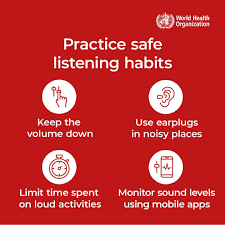
Photo credit:WHO
Construction workers can improve their listening safety habits by:
*Becoming acquainted with the proper operational sounds of equipment and tools
*Listening closely to instructions. Ask questions if instructions are unclear or confusing
Stay alert


 Grenotek Engineering Services