A West Yorkshire cosmetic manufacturing company has been fined after a worker lost part of a finger while cleaning a machine.
On 8 October 2021, the man was working on a tube filling machine at Orean Personal Care Limited at its base in Cleckheaton, West Yorkshire.
He was supervising five members of staff who were using the machine to fill tubes with a product that needed to stay hot. During the process the machine became contaminated and had to be cleaned. When the employee was cleaning the machine, part of it moved, trapping his finger, and causing the injury. Part of his middle finger was amputated, and he still suffers pain in his finger end and may require additional surgery.
An investigation by the Health and Safety Executive (HSE) found that the interlocked guard had been bypassed to allow the machine to run with the guard door open. The risk was not managed properly and a range of employees from machine operators to cleaning staff were exposed to it.
On 16 January at Leeds Magistrates’ Court, Orean Personal Care Limited of Stubbs Beck Lane, Cleckheaton, West Yorkshire pleaded guilty to breaching Section 2 (1) of the Health & Safety at Work etc Act 1974. The company was fined £300,000 and ordered to pay £4,511.70 in costs.
After the hearing, HSE inspector Justine Lee said: “Moving machinery can cause serious injury and it is essential that access to it is prevented at all times, including during maintenance and cleaning work. The use of effective guarding is an absolute duty and, when complied with, will prevent this type of injury.”
This prosecution was brought by HSE enforcement lawyer Gemma Zakrzewski.
A housing company based in Kent has been fined £528,000 after an employee repairing a fence post inadvertently struck an underground cable, suffering burns to his face.The MHS Homes employee and a colleague had been tasked by the company to repair three fence posts in a back garden of a tenant on 10 January 2023.
They had already repaired two of the posts and started on a third, when one of the workers struck an underground electrical cable as he tried to break through some concrete using a breaker.The company failed to provide the employees with information on the location of, or the tools to safely excavate around, an electrical cable and gas pipe.
An investigation by the Health and Safety Executive (HSE), found that MHS Homes often excavated the ground. However, they never provided any information to employees on the location of underground services and did not provide suitable equipment to detect and safely excavate underground services.
They had previously identified the risk of underground services in a risk assessment in 2017.On this occasion, the two employees were digging not only by an electrical cable, but also a gas service. This heightened the risk of a fire or explosion, with the potential to kill not employees and members of the public nearby, as well the risk of destroying property.MHS Homes of Broadside, Leviathan Way, Chatham, Kent pleaded guilty to breaching Regulation 16(2), by virtue of non-compliance with Regulation 25(4), of The Construction (Design and Management) Regulations 2015. The company was fined £528,000 and must pay £4,122 in costs following a sentencing hearing on 24 April 2024.
After the hearing, HSE inspector Peter Bruce, said: “Underground services are widespread and represent a significant risk. It is important measures are taken to identify them before any excavation work is undertaken.“On this occasion, an electrical cable was struck and a worker suffered minor injuries. However it could have been much worse and potentially fatal.“Those excavating the ground need to ensure that they obtain service plans prior to the work taking place. It is also vital that employees are provided with the correct tools and detection equipment to do their work safely.”This prosecution was brought by HSE enforcement lawyer Rebecca Schwartz and supported by HSE paralegal officer Ellen Garbutt.
Tata Chemicals Europe Limited has been fined after a young father died following an incident while erecting a scaffold tower in a chemical plant in Northwich.Michael Densmore, from Halewood in Merseyside, died following complications to the wound he sustained after his right foot slipped into a trough containing a liquid chemical calcium hydroxide – more commonly known as ‘milk of lime’ – causing chemical and thermal burns.The 37-year-old father-of-four was one of a number of scaffolders employed by Altrad NSG to erect scaffolding at Tata’s Lostock Hall site.
On 30 November 2016, during the course of this work, Mr Densmore stepped over a trough which contained milk of lime – which had been heated to approximately 90 degrees centigrade. His right foot slipped on an unfastened lid covering the trough, resulting in him sustaining chemical and thermal burns to his foot and ankle.He was airlifted to Whiston Hospital burns unit, where he received specialist treatment and underwent surgery on 8 December and was discharged just over a week later. However, on 3 January 2017, while at home, he suffered a haemorrhage to his right foot and was taken to hospital following a 999 call, but tragically died.In a statement issued by his family, Micheal was described as ‘a loving and amazing role model’ to his sons and two nieces.
Our lives fell apart and have not been the same since that terrible day,” they said. “Nobody should have to lose someone they love, due to an accident that happened at work.
“A mother should never have to give CPR to her own son, and a partner, should never have to tell their children that their dad will not be coming home.
“Michael has missed so many life events in the past seven years, including missing his nieces having their own babies, his eldest son giving him a grandson, his youngest boys communions, to name just a few.
“What hurts us the most is the fact that he will never be able to complete all the plans he had for life, including marrying his Helen.
“The trauma, we have all suffered as a family, cannot truly be put into words. We were once a small happy close-knit family, who all lived life to the full, with Michael being the leader and now we just about get through each day.”
The Health and Safety Executive (HSE) investigation found there was no permit in place for hazardous work in a live chemical plant. Little proper thought had been given to the risks involved by those responsible for ensuring staff safety. As far as the scaffolding team was concerned, there was no clearly understood plan to address these risks. Mr Densmore had only received a brief induction when he started work on the site some months before. Crucially, he had not been warned that there would be chemical product flowing through the plant and that the lids to the trough had not been properly sealed. Tata employees had been seen working on or near the troughs and there were no visible warning signs in place.
It also found that there had been previous prosecutions of Tata Chemicals Europe relating to health & safety failures at Lostock Hall and nearby Winnington Lane.
Tata Chemicals Europe Limited, of Winnington Lane, Northwich, Cheshire pleaded guilty to breaching Section 3(1) of the Health and Safety at work etc. Act 1974. The company was fined £1.125 million and ordered to pay £60,603.54 in costs at Chester Crown Court on 5 June 2024.
Speaking after the case, HSE inspector Matt Lea said: “This tragic death could have been preventable had Michael Densmore and his colleagues been managed under a robust permit to work system for working in a live chemical plant containing corrosive chemicals which had been heated almost to boiling point.
“Michael should not have been put in this unsafe working situation and should have been warned about the dangers of stepping over the troughs and that they were still in operation.
“Companies should learn the lessons from this incident if they have staff or contractors working in a similar environment and be aware that HSE will not hesitate to take appropriate enforcement action against those that fall below the required standards.”
This prosecution was brought by HSE enforcement lawyer Chloe Ward and supported by HSE paralegal officer Sarah Thomas.
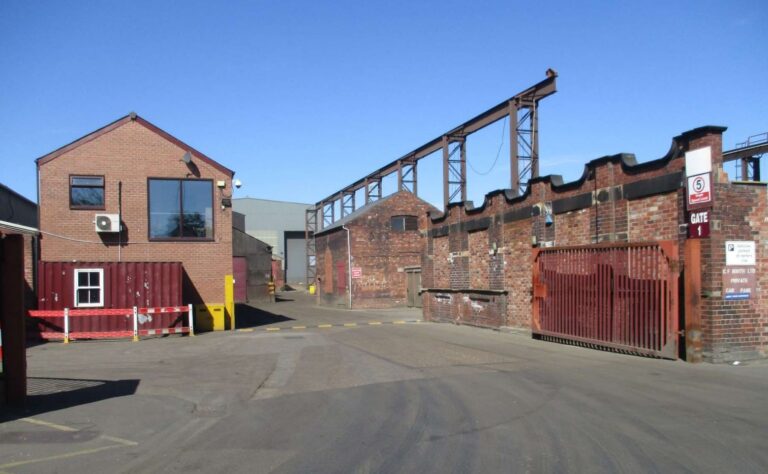
A Yorkshire metals recycling company has been fined £1.2m after a worker was injured after being struck by a wagon at a processing site.On 10 August 2020 an employee of CF Booth Limited was walking across the site yard in Rotherham when he was struck by a moving 32-tonne skip wagon. The man was not wearing his hi-vis jacket and did not see the wagon approaching. The wagon driver did not see the employee prior to the collision due to concentrating on manoeuvring the vehicle around some low-level skips which had been placed on the corner near where the employee was crossing the yard.Following the incident, the man sustained a fractured skull and also fractured his collar bone in two places but has since made a full recovery
A Health and Safety Executive (HSE) investigation found that at the time of the incident the site was not organised in such a way that pedestrians and vehicles could circulate in a safe manner. A suitable and sufficient workplace transport risk assessment was not in place for the segregation of vehicles and pedestrians. The company had failed to take steps to properly assess the risks posed by the movement of vehicles and pedestrians. The incident could have been prevented by adequately assessing the risks and implementing appropriate control measures such as physical barriers and crossing points.
Every workplace must be safe for the people and vehicles using it and traffic routes must be suitable for the people and vehicles using them. HSE has guidance on workplace transport with advice on keeping traffic routes safe and separating people from vehicles.
At Sheffield Magistrates’ Court on April 25 CF Booth Limited of Clarence Metal Works, Armer St, Rotherham, pleaded guilty of breaching Section 2 of the Health and Safety at Work etc. Act 1974. They were fined £1.2million and ordered to pay costs of £5,694.85.
After the hearing, HSE inspector Kirstie Durrans said: “If CF Booth Limited had assessed the risks and ensured vehicles and pedestrians could circulate in a safe manner, this incident could have easily been avoided.
“Companies should be aware that HSE will not hesitate to take appropriate enforcement action against those that fall below the required standards.”
This HSE prosecution was brought by HSE enforcement lawyers Karen Park and Kate Harney, and supported by paralegal officer Rebecca Forman.
Openreach Limited has been fined £1.34 million after an engineer died whilst trying to repair a telephone line.Alun Owen, from Bethesda, died after he slipped and fell into the River Aber in Abergwyngregyn and was swept away on 6 October 2020.
The 32-year-old has been described by his family as a ‘loving and selfless character’.An investigation by the Health and Safety Executive (HSE) and North Wales Police, found that a number of Openreach engineers had been attempting to repair the telephone lines, which ran across the river, over a period of two months. They had been working both near and in the river. At the time of the incident, there had been flooding in the area which meant the river was much higher and faster flowing than usual.
Mr Owen entered the water and made his way to an island in the middle of the river in order to try and throw a new telephone cable across to the other side by taping it to a hammer and then throwing the hammer. Whilst attempting to cross the remaining section of the river, he slipped in a deeper part and the force of the river swept him away.
The investigation found that there was no safe system of work in place for work on or near water, nor had Mr Owen – and others working by the river – received training, information or instruction on safe working on or near water.A statement from Mr Owen’s family said: “The genuine love and affection shown to us since the tragedy that unfolded on the 6 October 2020 is a real testimony to Al and how everyone just loved his friendly, loving and selfless character.“Although it’s sometimes difficult to see beyond the sorrow, we will keep his memory alive through reminiscing those many precious moments he had in his love-filled life.”Openreach Limited pleaded guilty to breaching Section 2 (1) of the Health and Safety at work etc. Act 1974.
The company was fined £1.34 million and ordered to pay costs of £15,858.35 at Llandudno Magistrates’ Court on 5 June 2024.Speaking after the case, HSE inspector Christina Roberts said: “This was a tragic incident that resulted in the death of a much loved young man.“Mr Owen’s family, friends and colleagues have always remained in our thoughts.“His death would have been preventable had an effective system for working on or near water been in place.“Mr Owen should not have been put in the unsafe working situation.
Companies should learn the lessons from this incident if they have staff who may work on or near water and be aware that HSE will not hesitate to take appropriate enforcement action against those that fall below the required standards.”North Wales Police Detective Chief Inspector Andy Gibson said: “Our thoughts remain with Alun’s family at this difficult time.“North Wales Police worked closely with HSE and whilst it was a protracted and lengthy investigation, it was critical that any failings were identified and acted upon.”This prosecution was brought by HSE senior enforcement lawyer Nathan Cook and supported by HSE paralegal officer Sarah Thomas.
A construction company has been fined following the death of a worker.
Gary Webster lost his life two days after drowning in the River Aire on 30 October 2017.
Mr Webster and another worker had been on a boat removing debris at the bottom of the weir gates at Knostrop Weir when their boat capsized. The boat had been pulled into turbulent water, caused by the considerable flow of water flowing over the top of the weir.
The 60-year-old was repeatedly pulled under the water and was eventually recovered by a diver 14 minutes later. The other worker managed to swim to safety.
Mr Webster was pronounced dead on 1 November 2017 at Leeds General Infirmary.
A Health and Safety Executive (HSE) investigation found BAM Nuttall Ltd had several operatives who were trained and authorised to control the weir gates so that the flow of the water could be slowed down. This would have allowed the debris to float away or be reached safely by boat. However, the company failed to carry out this task.
BAM Nuttall Limited, of Knoll Road, Camberley, Surrey, pleaded guilty to breaching Section 2(1) of the Health and Safety at Work etc. Act 1974. The company was fined £2.345 million and ordered to pay £25,770.48 in costs at Leeds Magistrates’ Court on 12 June 2024.
HSE inspector Jayne Towey said: “BAM Nuttall Ltd failed to plan the work. It failed to carry out any assessment of the risks involved with the task. It failed to have any regard to the recognised hierarchy of controls to reduce the risk associated with removing debris from the water. It failed to ensure that suitable safety measures were in place and failed to put in place a safe system of work.
“This incident could so easily have been avoided by simply carrying out correct control measures and safe working practices.”
This prosecution was brought by HSE enforcement lawyer Jonathan Bambro and supported by HSE paralegal officer Sarah Thomas.
Two companies have been fined more than £380k after a worker fell through the roof of a retail unit in Milton Keynes.The roofer, who was 32 at the time, fell more than 20 feet through a roof light on to a suspended ceiling at Unit 103, Watling Street, on 19 July 2019.The man landed on the floor below and broke his ankle.
An investigation by the Health and Safety Executive (HSE) found there was ineffective planning of access arrangements to and on the roof by STP Construction Ltd, resulting in workers having to pass fragile materials before they could make use of the fall arrest system installed there.
Two companies involved in the incident were fined a total of over £388,000 + Costs.After the hearing, HSE inspector Jenny Morris said: “This incident could have easily been avoided. Assessing and planning work at height is essential to ensuring that suitable and sufficient measures are in place to prevent falls from height.
SLIP -is caused when there is too little friction or traction between feet and walking or working surface, resulting in loss of balance. TRIP -is caused when a foot or lower leg hits object and upper body continues moving, resulting in loss of balance.-Stepping down to lower surface and losing balance. FALL – occurs when a worker is too far off center of balance and unable to balance off properly whiles working.
There are typically two types of falls 1. Fall at the same level 2. Fall to lower level
Some common Injuries caused by slip,trip or falls are 1.Sprains and Strains 2.Bruises and Contusions 3. Fractures 4. Abrasions and Lacerations
These injuries occur usually on the parts of the body such as knee, ankle or foot,wrist or elbow,back or shoulder, hip and head.
Ways to Prevent Slips, Trips and Falls 1. Where possible, avoid walking on wet/slippery surfaces; wipe off the bottom of wet footwear. 2. Use flashlights or helmet lights to stay clear of holes or floor openings, wet or slippery surfaces, and debris or equipment. 3. Do not step on any surface until you have visually inspected it to ensure there are no holes or weak spots and that it can support workers and their equipment. 4. Never carry equipment or loads in your hands when climbing ladders. 5. Wear backpacks and tool belts to hold equipment and keep both hands free. 6. Use fall protection when walking or performing emergency response activities near unprotected edges of elevated surfaces. 7. Use communication devices, particularly hands-free devices, for contacting employers/incident commanders and other workers about slip, trip and fall hazards.
Not Wearing Seatbelt: Imagine you’re a construction worker driving a forklift around a site. Even for short distances, always buckle up. In a sudden stop or collision, the seatbelt can prevent serious injury.Abdominal, skeletal, vascular, and thoracic injuries such as whiplash, concussions, bone fractures, musculoskeletal damage, internal bleeding, and more are the most common effects that result from car accidents. Many people endure long-term complications, sometimes months—if not years—after an accident
Not Inspecting Equipment: Suppose you’re a mechanic preparing to use a power drill. The bit of the drill was not properly secured and ejected immediately after starting to cause injury to another worker. Before starting, check for any damage or defects. Using faulty equipment could lead to accidents or malfunctions.Each site should develop a plan for equipment inspection. This should be actively undertaken and supervised by the health and safety officers to ensure that it is implemented. Many accidents could have been prevented if due inspections were not sidelined.
Not Using Fall Protection: Picture yourself as a roofer installing shingles. Always wear a harness and secure yourself to an anchor point. This precaution prevents falls from heights, reducing the risk of severe injuries or fatalities.Importantly, remember that overhead Fall Arrest Systems are not just about compliance with health and safety regulations; it’s about ensuring the well-being of the employees who put their trust in it. The significance of an overhead fall protection in ensuring safety while working at height cannot be overstated. After all, every worker deserves the right to go home safe at the end of the day
Blind Spots: As a warehouse worker, stay clear of the blind spots around forklifts or trucks. If you can’t see the driver, they likely can’t see you. Being in these blind spots increases the chance of being struck or caught in a collision.
Standing in Line of safety: Suppose you’re working with a colleague operating a nail gun. Stand clear of their line of safety to avoid getting hit by a misplaced nail. Being aware of potential hazards like this can prevent serious injuries.
Not Maintaining Clean Work Areas: Imagine you’re in a manufacturing facility. Properly storing tools and materials reduces clutter and prevents tripping hazards. A clean workspace also makes it easier to spot potential dangers.
Improper Chemical Handling: Picture yourself in a laboratory. Ensure all chemicals are correctly labeled with their contents and hazards. Proper storage prevents accidental spills or exposure, protecting both you and your colleagues.If your workplace focuses on chemical storage safety best practices, there will be a negligible risk of property damage. However, storing incompatible chemicals together can cause fires or explosions, resulting in millions or billions of dollars in damage to property. If your organization’s building burns down, you won’t be able to make the product and will lose a significant amount of money from a lack of manufacturing.
Not Communicating Hazards: Suppose you notice a loose railing on a staircase. Inform your supervisor or colleagues immediately. By communicating hazards, you help prevent accidents and create a safer work environment for everyone.
Not Stopping Work for Hazards: Imagine you’re working on a construction site and notice a gas leak. Stop work immediately and evacuate the area. Addressing hazards promptly prevents potential accidents or injuries.
When a worker perceives an unsafe condition, hazard, or behavior on the job site, they have an obligation to stop work or intervene on behalf of another person at risk.
If the danger is immediate, stop work immediately and begin the SAFER sequence. If the danger is not imminent, report the hazard to a supervisor.
Construction is often dangerous work. With heavy machinery and other tools that can be harmful when not operated correctly, there are many risks on the jobsite.
It is important that the safety rules are put into place and strictly followed.
Hazards for front end loader operations
There are four main categories of front end loader hazards. These include: struck-by hazards, caught-in hazards, caught-between hazards, and tip over hazards. All can result in serious injury or death.
Struck-by incidents
When a struck-by incident occurs, someone is struck or hit by a front loader. The person operating the front end loader must be careful and cautious and stay aware of the other people in the work area. to avoid striking other individuals.
Just like when driving a car, there are blind spots when operating a front end loader. If the individual on the ground is in a blind spot, they will not be seen by the operator and may get struck.
Always check your blind spots and ensure the work area is clear to avoid struck-by incidents.
Caught-in incidents
Caught-in incidents are one of the most common front end loader hazards. These hazards mainly affect individuals who are working outside of the front end loader, not the operator, although that is not always the case.
When a person is struck by the front end loader and caught within the machinery, that is a caught-in incident.
Additionally, when someone is working outside or below the machine, the load can shift or fall and strike them, causing them to be caught.
Caught-between incidents
If a person is struck by the front end loader, they may get caught between the loader and a wall, another piece of heavy machinery, or another surface. You can get pinned between the front end loader and whatever is beside you.
Tip-over incidents
Loads that are put onto the front end loader should be the right weight, height, and in the correct position to ensure that they won’t shift and cause the machinery to tip over.
If a front end loader tips over, there is a great risk for the operator and anyone in or near the work area.
Observe the work area for uneven grounds as well, and be sure to operate the front end loader at a safe speed at all time.
NEVER STAND IN THE BLIND SIDE OF A FRONT END LOADER DURING OPERATIONS








 Grenotek Engineering Services