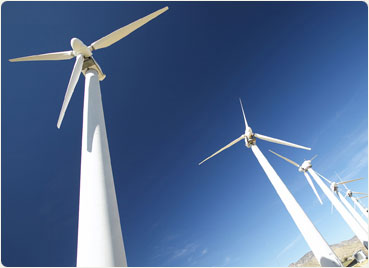
Avoiding Load Shedding in Ghana.

Landing-Env-Energy

The thought of irregular access to power and its frequent outages may describes better how swiftly the nation addresses its power fluctuations with an unsustainable sources of energy sources. More work has progressed on the thermal power plants expansion projects like Takoradi 3,Kpone Thermal Power plants etc.

As a developing country,energy is vital for the rapid growth of our economy especially at this crumbling economic times when many employers have been laid off several employers because of rising market price and cost of production.
Hence these energy sources seem vital for economic transformation. The US, China and europe have already had their fat share of growth from use of these energy sources.
Nevertheless what progress is being made by the government on renewable projects.
The adverse effects on land,air and water from power generation from thermal plants are popular and well written to us.
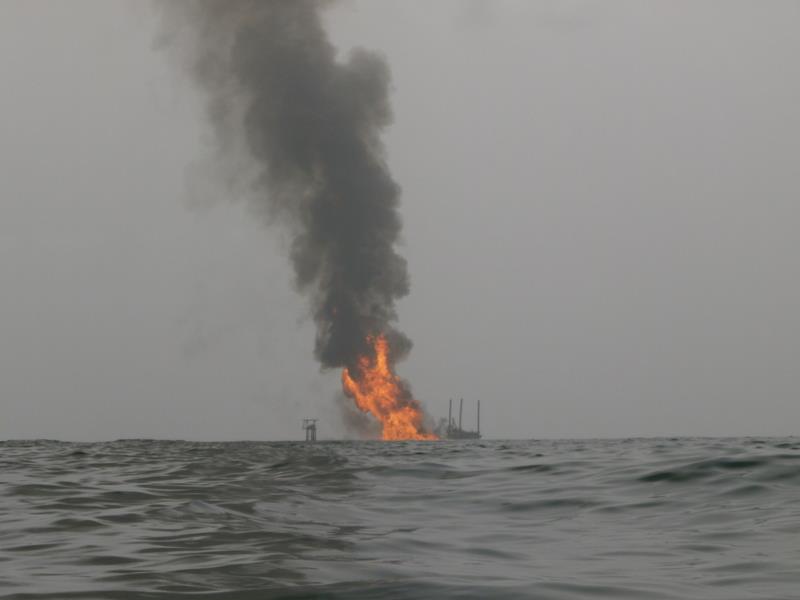
-gas-rig-fire
These power plants have less than 50% efficiency for power generation from their fuels. Typical power plant emits 90 % of its mercury into the air and 10 percent inland.
A sufficient mix of renewable energy to our power generation is the best to achieving access to energy.

Countries like Germany are more closer to providing almost half of their entire energy from renewable sources.
Germany has a very open energy market. Many private energy companies have built enormous wind and solar facilities which add to their national grid at a fee.
Competitive market is always an advantage to the consumer.

The United Nations Sustainable energy for all is centred on universal access to energy,renewable energy and energy efficiency.

Continue on an article I read on the Finder yesterday as follows:

The United Nations Development Programme (UNDP) has brokered a transfer of renewable energy technology from China to Ghana agreement with funding from the Government of Denmark.

The formal signing ceremony to consolidate the partnership between the Government of Ghana, UNDP and Governments of China and Denmark on Renewable Energy Technology Transfer has been concluded.

The partnership is under the project ‘China-Ghana-South-South Co-operation on Renewable Energy Technology Transfer.’

Its objective is to ensure that Chinese renewable energy technologies are optimally responding to priorities and needs in Ghana, and critical skills are also transferred and developed to make the technologies actually work on the ground.

This approach will have a tremendous impact on increasing access to energy for the rural poor in Ghana.

The four-year project, funded by the Government of Denmark at $2,720,000, is a key component of UNDP’s support to the implementation of Ghana’s Sustainable Energy For All.

The Plan, adopted in 2012, includes concrete commitments and actions aimed at improving access to modern forms of fuels for cooking and promoting productive uses of energy, with focus on the use of renewable energy resources.

“We want this project to represent a best practice in South-South co-operation. We want it to effectively address Ghana’s need to increase universal energy access through off-grid community-based electrification and increased share of renewable energy,” said Ms Gita Welch, acting Resident Representative of UNDP in Ghana.

The project, which focuses on technologies such as solar and wind for irrigation, biogas, mini hydro and improved cook stoves, will have private sector development as its centre piece.

“In a fast-growing economy like Ghana, there are substantive opportunities for private sector investments in the energy section, in particular in renewable energy and clean technologies,” noted Gita.

The initiative is one of the first examples of triangular South-South co-operation between China and Africa with support from a donor.

The partnership includes Zambia as the second African country working with China through UNDP, around the promotion of the UN’s initiative ‘Sustainable Energy for All,’ which was made possible by a funding from the Government of Denmark.
Posted in Uncategorized | Leave a comment

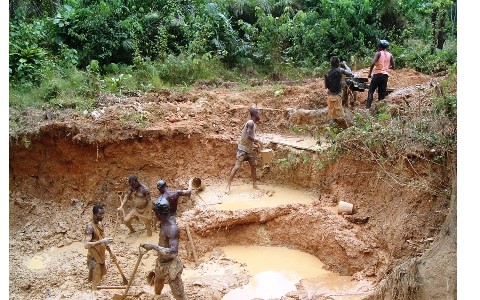
Ghana’s Illegal mining menace

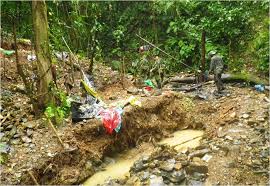
Illegal mining activitiesLogging activities leading to deforestationAbout five months ago, I wrote a story of how illegal mining activities in the country are being done in some communities in the eastern region and the Ashanti region under the compromise of many of the “watchmen”


I mean the very people who have been entrusted with protecting our rich mineral and forest resources have settled in to working undercover with some foreigners with no mining permits and little technology to degrade our forest resources

After the story, the government and various “watchmen” increase awareness,and perhaps prosecuted few victims and deported others as a measure of curbing this social menace.

It is not surprising to me and many others that within few years, our forest reserve has depleted further beyond the Forestry Commissions annual deforestation rate as reported below:

Ghana’s forest cover stands the risk of being decreased to considerable level in the next generation if illegal mining in forest reserves is not stemmed, the Forestry Commission, has warned.

The Commission said it is the responsibility of stakeholders to tackle the menace with zeal to sustain the eco-system and biodiversity.

Currently, forest reserves including the Supuma, Subri, Bonsa, Upper Wassaw, Apamprama, Desin, Oda, Atiwa, are being degraded at an alarming rate due to illegal mining.

Mr Alexander Amoako Boadu, National Director of Operations of Forestry Services Division of the Commission, told Ghana News Agency that the trend has led to the pollution of water bodies, while large tracts of forests have been depleted.

He made this known on the sidelines of an inspection by the Ashanti Regional Security Council (REGSEC) to Oda forest reserve near the Amansie-Central District, following massive illegal mining activities in the area.

It is estimated that the rate of deforestation currently stands at 65, 000 hectares per annum and Ghana’s total forest cover, which stood at 8.2 million hectares, representing 34 per cent of the total land area, at the turn of the last century, had decreased to 1.6 million hectares.

Mr Samuel Sarpong, Regional Minister and Chairman of the REGSEC, affirmed the Council’s resolve to stop all illegal mining activities to protect the environment.

He said a task force has been mandated to arrest those found culpable of degrading the forest.

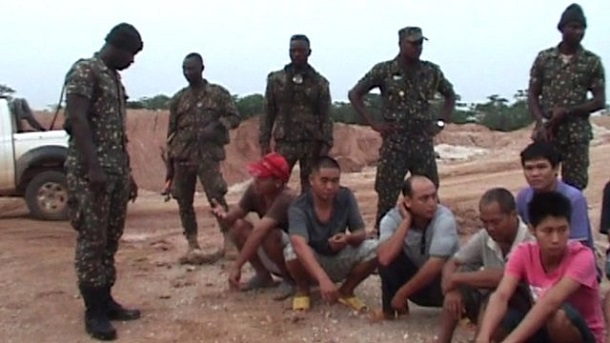
In a related development, two Chinese nationals have been arrested and being investigated by the police for illegally mining in the Oda forest reserve.

Posted in Uncategorized | Leave a comment

Journalists Refreshed On Oil, Energy Reporting

Image

Accra — THE International Institute of ICT Journalism, Penplusbytes, in partnership with Revenue Watch institute – Natural Resource Charter (RWI-NRC) is organising a refresher course for more than 30 journalists that successfully completed exercises on energy reporting.

The refresher workshop and mentoring roundtable is aimed at bringing together past trainee journalists who have benefited from this initiative to engage with Stakeholders in the Oil and Gas sector on topical issues and developments within the sector.

According to Kwami Ahiabenu II, President of Penplusbytes, “The key objective of this event is to sustain the interest of Ghanaian journalists in covering the extractive sectors, update journalists’ knowledge of current and emerging governance issues in the sector and to provide a platform for journalists to seek the advice of mentors and exchange ideas.”

Dr Joe Asamoah, an eminent expert in the oil and gas sector and energy economist will deliver the key note address alongside such presenters as Dr George Lugalambi, the Media Programme Officer of RWI-NRC, Dr Mohammed Amin, Africa Centre for Energy Policy (ACEP) and Dr Arne Disch, Managing Partner Scanteam, Norwegian independent advisory group with extensive field-experience from 100 countries.

Penplusbytes working with other partners in Uganda and Tanzania have since 2010 trained nearly a hundred journalists on skills and knowledge needed to effectively report on the extractive sector in Ghana, Uganda and Tanzania.

This has resulted not only in an increased reportage of oil and gas stories but also, and more importantly, an improvement in the depth, content, scope and impact of oil and gas stories in the media landscape in the 3 selected countries.

Posted in Uncategorized | Leave a comment

Africa: Climate Change Is Already Impacting Vulnerable Communities, Says Report


Image

This week the Intergovernmental Panel on Climate Change (IPCC) released its latest report on the impact of climate change. The report provides a much sharper warning than previous ones about the threat posed to food security, writes Richard Choularton, head of WFP’s climate resilience unit.

The warnings in the latest report from the Intergovernmental Panel on Climate Change are even more serious when you consider some of the other risks and mega-trends that the authors highlight. I refer to poverty and social inequality, forexample, along with urbanization and the globalization of food systems.

For the most food insecure and vulnerable people – many of whom live in highly degraded environments that amplify even small climate shocks into food crises — the new report is a stark reminder of a reality they are already facing.

Climate change is projected to slow down economic growth, erode food security, exacerbate poverty in most developing countries, and create new poverty traps in both developed and developing countries. The report provides high confidence that negative impacts of climate change on crop yields to date have been more common than positive impacts. Crop yields could decline by up to 2% per decade for the rest of this century.

Disproportionate effect on poor

Rural livelihoods will be particularly affected, through effects on water supply, food security and agricultural incomes, as well as shifts in production areas of food and non-food crops across the world. These things are expected to disproportionately affect the poor and marginalized in rural areas.

Here I’m thinking about female-headed households and those with limited access to land, modern agricultural inputs, infrastructure, and education.

In urban and rural areas, wage-labour-dependent poor households who are net buyers of food are expected to be particularly affected by food price increases.

Climate change can indirectly increase risks of violent conflicts by amplifying well-documented drivers of these conflicts, such as poverty and economic shocks. Increased conflict, as well as extreme weather events and longer-term changes in climatic conditions, are all projected to increase human displacement.

Disaster risk management

In addition to the potential impacts on climate change, the IPCC identifies progress on adaptation. However, while adaptation is increasingly being included in planning and policy processes, evidence of implementation of adaptation responses is more limited. Where action is being taken, the IPCC highlights that insurance programs, social protection measures, and disaster risk management may enhance long-term livelihood resilience among the poor and marginalized. Trade reform and investment can also improve market access for small-scale farmers.

While the IPCC report highlights the growing risks of climate change, governments and organizations such as WFP are proactively taking steps to include climate risks in future planning, and we are already implementing large-scale resilience efforts in many countries in which we operate.

Read more about impacts of climate change on food security.

WFP and Climate Change

WFP is developing innovative new food assistance tools that help food insecure households adapt to climate change and manage climate risks. Through the R4 Rural Resilience Initiative, WFP, Oxfam America, and Swiss Re are working to scale up the provision of drought microinsurance to people who cannot traditional access insurance through safety nets.

WFP is the second largest multi-lateral implementing entity of the UNFCCC Adaptation Fund, working with national governments to design and implement concrete climate change adaptation projects in Ecuador, Egypt, Mauritania, Nepal, Indonesia, and Sri Lanka.

In WFP’s new strategic plan, helping food insecure communities to build resilience and adapt to climate change is a priority. Already we are implementing large- scale resilience building efforts in many countries around the world.

Posted in Uncategorized | Leave a comment

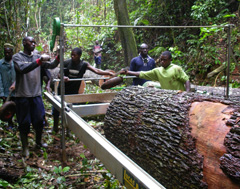
Ghana: Timber Validation Committee Inaugurated in Accra

Image

PRESS RELEASE

An eleven (11) member Committee to improve activities in the forest sector has been inaugurated in Accra.

The Timber Validation Committee (TVC) would monitor and ensure that the Department of the Forestry Commission, which is responsible for the verification and validation of applications for licenses, performs its functions in a credible, transparent and independent manner.

It would also establish measures to ensure that the processes of verification and verification were not interfered with as well as settle complaints made in respect of the Timber Validation Department (TVD) concerning process of verification and validation for licences regarding timber products.

Speaking at the inaugural ceremony, the Minister for Lands and Natural Resources, Alhaji Inusah Fuseini said government had an added responsibilty to educate the citizens about their rights and obligations and also the duties of the Legality Assurance System (LAS).

The Minister lamented on the weak laws enforcement inadequate monitoring and feedback mechanisms and inadequate participation of stakeholders in the policy making process as the root of illegal logging problem. He was hopeful that the TVC would address the existing inadequacies in the Forest sector.

Alhaji Fuseini urged stakeholders in the forest sector and the citizenry in general to contribute their quota in ensuring good governance.

Justice Dennis Adjei, the chairman of the committee, expressed gratitude to the Minister for appointing the members and having faith in them.

He reminded the other members of the task ahead and cautioned them to be transparent in their work.

Members of the committee include Okatakyi (Dr.) Amanfi VII, Mr. Samuel Afari Dartey, Mr. Frederick Gavor, Mr. Musah Abu-Juam, and Mr. Frank Adu-Poku.

The others are Madam Sedina Agbemava, Mr. Joshua Ansah, Mr. Imad Berbari, Mr. Kofi Afreh Boakye, and Chris Beeko.

Source: ISD (Benjamin Tandoh)

Posted in Uncategorized | Leave a comment

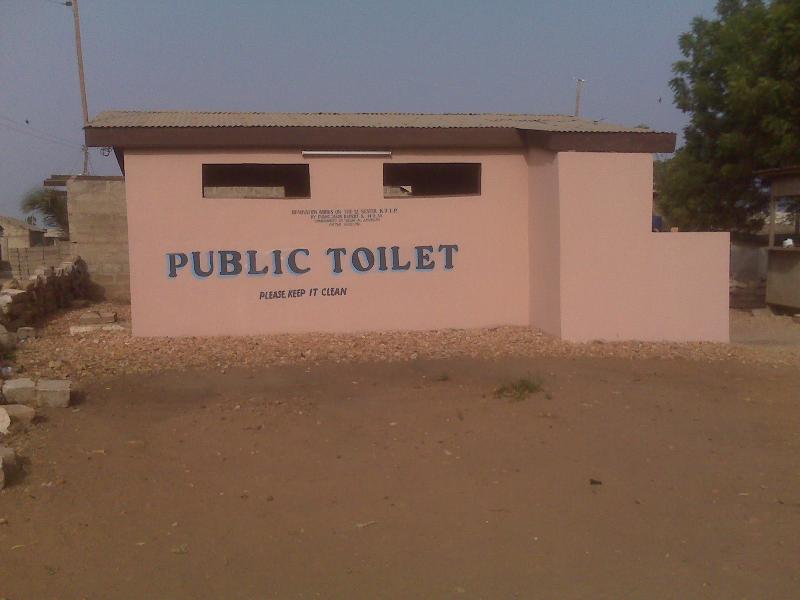
Ghana:10,000 public schools without toilets


Image

A SURVEY conducted on public schools across the country, has revealed that about 10,000 do not have any toilet facilities.
The number is half of the about 20,000 total number of public schools in Ghana, apart from the thousands of privately owned schools that may not have.

This revelation was made at a dissemination workshop held on Thursday, on National Minimum Standards and Implementation Models for WASH (water, sanitation and hygiene) in schools in the country.
The dissemination workshop was held to make known to stakeholders the validated report on new minimum standards for school sanitation facilities agreed by the Ghana Education Service () and the implementation models to be used for them.
In an interview with the Daily Graphic after the workshop, Mrs Kate Opoku, the Director for School Health Education Programme (SHEP), GES, said it was to verify the state of WASH facilities in schools across the country, that consultants were contracted to do a needs assessment of all public schools in the country.
“And from the results that they gave, it came out that about 10,000 schools have no WASH facilities countrywide. With those who have, the conditions were not good. For schools that don’t have any facilities, children are forced to use the bush,” she said.
National Minimum Standard
“Most of the toilet facilities do not have any hand washing facilities. We expect that when the child enters or visits the toilet, he comes back to wash the hands before whatever he is going to do, and we expect the facility to be near where the toilet is,” the SHEP Director stated.
According to the agreed minimum standards, facilities must comprise toilets, urinals and hand washing facilities among others.
Mrs Opoku however bemoaned that water was one of the major problems affecting the provision of sanitary facilities in the schools.
“In the schools they will have pipelines laid alright but no water is flowing through and even if there is water they have to pay for it. Schools lock up facilities because of their inability to pay.
“Sometimes, girls, because of these WASH facilities will not come to school when they are in their period. They don’t have anywhere to change when they feel wet. So what do you do. You would rather prefer to stay at home.
“If for one week – five days, that child is in that condition, and the whole week a new topic is being treated in mathematics for example, it means she has missed that whole topic.
Cost of facilities
Touching on how much it would cost to construct facilities for the schools that do not have, Mrs Opoku said each facility comprising separate urinals for males and females, toilets for teachers, boys and girls, and a hand washing facility including a reservoir, would cost not less than GH¢18,000 as suggested by the consultants.
She however noted that that was lower, compared with the quotation of US$18,000 given by the UNICEF WASH specialist in Ghana.
When asked why so public schools had been built without sanitation facilities, Mrs Opoku explained that the school infrastructure, especially those built long ago, were normally put up by Local Government (Assemblies) and those infrastructure were mostly put up without sanitation facilities or inadequate facilities.
“You are in Ghana; when they say they’ve built a school you only go and find classrooms and they will put one room in between,” she said.
Speaking to the same issue with the Daily Graphic in an interview on Friday, Mr Harold Esseku, one of the consultants, put the number of schools without toilets between 9,000 and 11,000.
He said the situation had arisen, because until about five years ago there was no policy on ensuring facilities were provided when school blocks were built and so those that were built before then do not have.
The way forward
In her closing remarks, Mrs Cynthia Bosumtwi-Sam, Curriculum and Research Development Division, GES who chaired the workshop, called for effective collaboration amongst the ministers of the three key ministries – Water Resources Works and Housing, Local Government and Rural Development and Education to ensure water available at all public schools.
She also suggested that different toilet models such as the VIP and others that do not require water must be used in the absence of water, while training must be organised to achieve behavioural change.

This story was first published by the Daily Graphic on April 2, 2014

Posted in Uncategorized | Leave a comment

GHANA HAS POTENTENTIAL FOR WIND ENERGY

BY EDMUND SMITH-ASANTE, COPENHAGEN

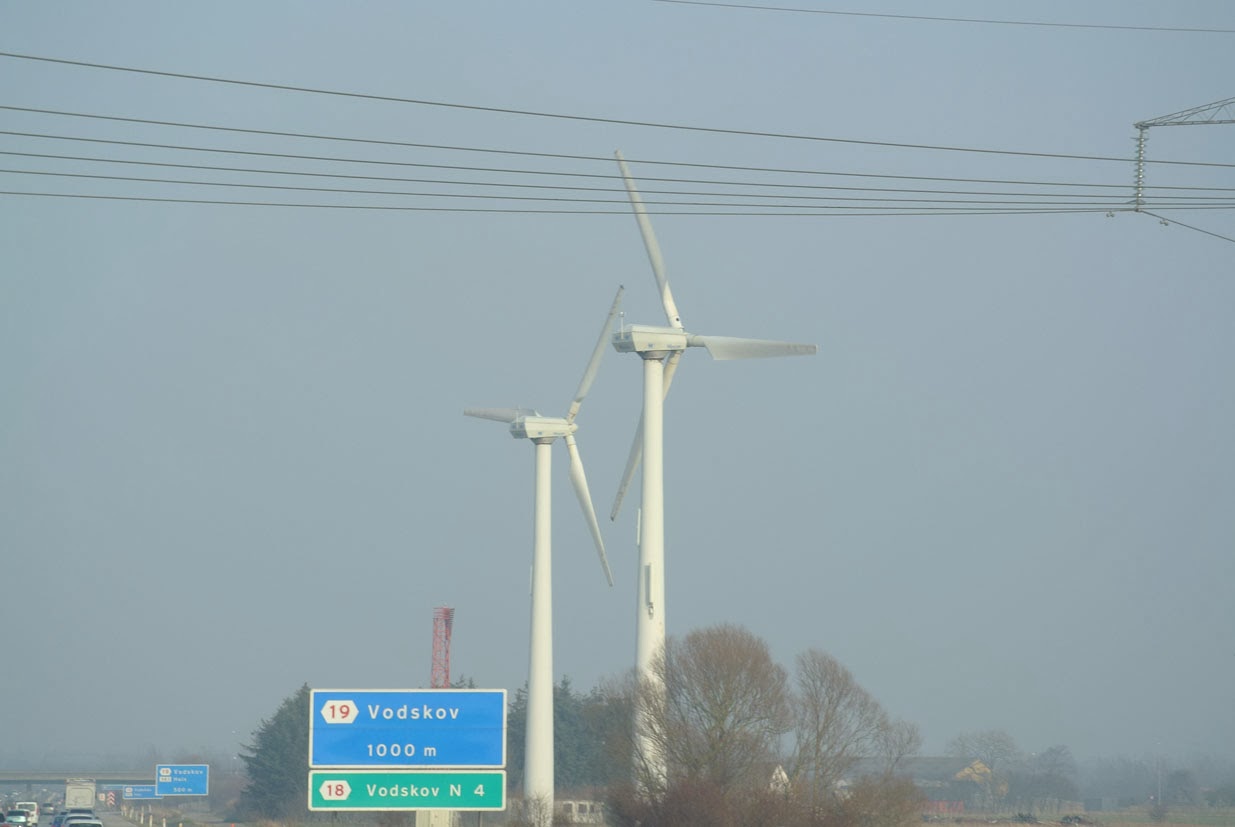
Windmills in Aalborg, Denmark

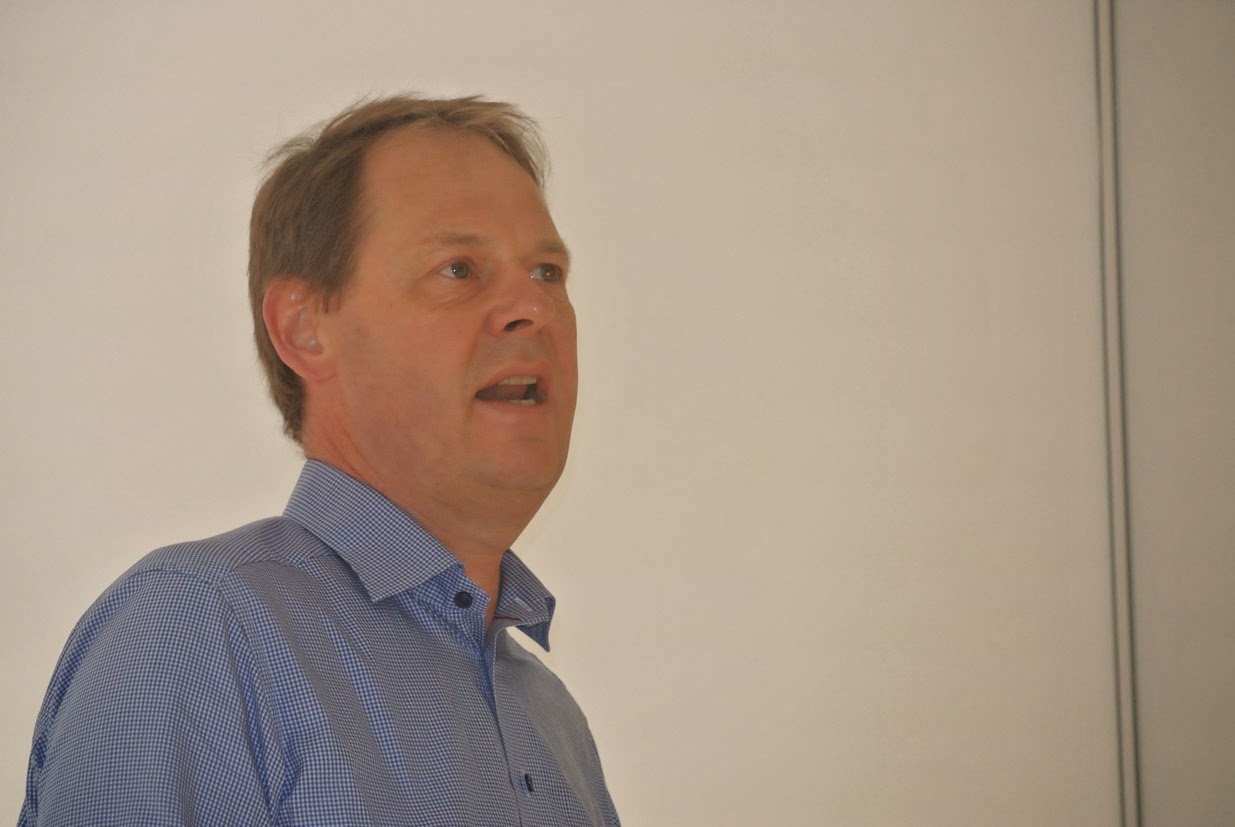
Mr Iver Høj Nielsen, Head of Press, State of Green Consortium, a public-private partnership in Denmark leading in the transition to a green growth economy, has said that Ghana has the potential for wind energy.

“South Africa and Ghana have lots of wind,” he told a group of 12 environmental journalists from Ghana, South Africa and Kenya on a Green Growth study tour of Denmark, who visited the office of the consortium referred to as the ‘House of Green’.

The week-long tour is being organised by International Media Support (IMS), an international NGO and funded by the Danish Ministry of Foreign Affairs.


While admitting that going into wind energy would require some investment, Mr Nielsen, who is also a business journalist, said he believed Ghana could always seek assistance from development partners if it decided to develop that renewable energy source.

Why invest in renewable energy

He told the journalists that Denmark resolved to invest in renewable energy, when they were caught unawares at the start of the global oil crisis in 1973/74. “We were 99 per cent dependent on imported energy and oil from the Middle East,” he said.

However, the Danish economy has grown by 80 per cent since switching to renewable energy, he stated.

“Energy consumption has remained the same, while carbon dioxide (CO2) emissions have been reduced,” he added.

Mr Iver Høj Nielsen, State of Green Head of Press

Mr Nielsen said to further increase their use of renewable energy, the Danish Government had set as its target for 2020, an increase in renewable energy consumption of final energy by 35 per cent and the supply of 50 per cent of electricity from wind power.

Denmark, also hopes to reduce the 2010 level of gross energy consumption by 7.5 per cent and reduce greenhouse gas emissions by 34 per cent, using the 1990 levels as a baseline.

Ultimate aim

The aim of Denmark, the State of Green Head of Press said, is to become a fossil fuel independent economy, with an ultimate target of using 100 per cent renewable energy in the energy and transport sectors by 2050.

Denmark also hopes to attain 50 per cent reduction in energy consumption in existing buildings by 2050 and phase out the use of coal by 2030.

Also touching on recycling of waste water, Mr Nielsen said, “The water in the Copenhagen habour is so clean that you can swim in it. People want to live in a society that is safe and clean.”

The journalists were also afforded the opportunity to use the House of Green’s interactive computer touch screens to learn more about green innovations and renewable energy.

FACTS 

  • The first offshore wind farm of the world was built in Copenhagen and it produced 2.2 megawatts of power. The latest to be built produces 7.5 megawatts of power, while another ongoing project is expected to produce over 8 megawatts of power.
  • State of Green is a public-private partnership founded by the Danish Government, the Confederation of Danish Industry, the Danish Energy Association, the Danish Agriculture & Food Council and the Danish Wind Industry Association.
  • H.R.H. Crown Prince Frederik of Denmark is the patron of State of Green.
  • House of Green is an interactive showroom presenting innovative solutions to challenges in climate change, management of natural resources and “green” production and has received about 1,500 high profile technical visits from decision makers around the world since opening in September 2013.
Posted in Uncategorized | Leave a comment

Illegal Miners Moving Into Restricted Forest Areas

ImageImage

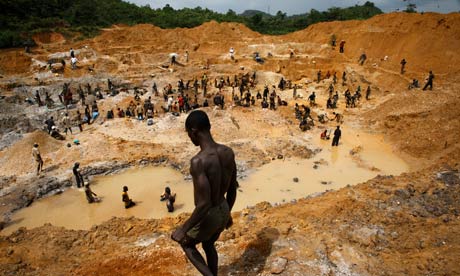
Accra — Illegal mining is posing severe challenges to mining communities in Ghana. The unlawful practice is gradually shifting to restricted forest areas with dire consequences to the environment.

Illegal mining is a major source of income for people living in mining areas. They work by digging pits close to the mining enclaves of big companies. But now, a new trend is evolving and people are beginning to exploit land for mineral wealth in protected forest areas.

Cudjoe Awudi, a corporate planning manager at Ghana’s Forestry Commission, says those who engage in such acts are flouting the laws of the country.

“People sneak into the reserves at night. Sometimes we can’t identify them. We have challenges of personnel and logistics,” said Awudi.

There are more than 270 such forest reserves in Ghana. They serve as sources of lumber as well as protection for some river bodies. However, inappropriate practices by the illegal miners are causing the loss of timber resources. Awudi said land degradation and cyanide spillage was also polluting affected soil and water bodies.

“It affects those downstream of the river. For example, Densu river in the Atiwa forest reserve. It supplies water to about 65 percent of Accra’s population. So if we don’t take care, then Accra may not get water. So we are trying to flush out the illegal miners, otherwise, cost of treatment of water will go up,” he said.

Other affected areas include Manzam and Tano Offin forest reserves in the western region of Ghana. Awudi said although gold prices have fallen on the world market, it still attracted local and foreign interests.

“Majority are Ghanaians but the Chinese have joined them to give them better technology. Then there are people from Mali and Burkina Faso. There is a case in northern Ghana where people from Ivory Coast and Mali entered a reserve called Bui National Park where the dam is. We just flushed them out,” he said.

The government of Ghana is working with community groups and law enforcement agencies to deal with the problem. However, a community based human rights group, WACAM, said more drastic measures should be adopted in dealing with the challenge. It said a mining law that allows two percent concessionary rights in restricted forests to multinational companies must be reviewed.

“The Ajenua Bepo forest reserve has been given as concession to Newmont. The Kubi forest reserve has been given to Anglogold to mine. Protected forest is not a product that you can pick and choose from; its whole. So once you start destroying elements, no matter how small, you destroy the integrity of the forest,” said Hannah Owusu-Koranteng, a director at WACAM.

Owusu-Koranteng said new provisions must prevent companies from externalizing their social, cultural and environmental costs to society. Penalties for violating the law must also be tightened to help prevent cyanide spillage.

Story by: Joana Mantey

Posted in Uncategorized | Leave a comment

From Economic down turns to Energy shut downs

-gas-rig-fireGhana has an option to invoke provisions in the contract agreement with the West African Gas Pipeline Authority for its inability to live up to contractual terms to deliver gas to Ghana.

But the country stands at a disadvantaged position, and is possibly gone begging Nigeria for the Gas, considering the urgent need for the commodity.

Ghana’s Minister of Energy, Emmanuel Kofi Buah and the Chief Executive Officer of the Volta River Authority, ING Kirk Kofie, are currently in Nigeria to broker terms for the timely release of the agreed gas from that country.

But a former Chief Executive Officer of VRA, Dr. Charles Wereko-Brobby, who signed the contract agreements with the suppliers, is pointing at a breach of contract, for which authorities of Ghana must demand answers.

“VRA and the government of Ghana should use whatever muscle it can muster to ensure that N-Gas delivered that which it had signed on to and delivers it consistently,” Dr. Wereko-Brobbey told Joy FM.

Industry experts who spoke to The Chronicle on the issue said Ghana cannot afford to flex its muscles in the circumstance. “We do have a contract alright but this is a commodity we need, without gas from Nigeria our situation will be worse than this.

“The truth is that if we threaten Nigeria with a suit they would stop giving us the gas. They need it themselves and they squeeze to give us, especially as we don’t have our own gas. Although we can invoke terms of the contract, I don’t think it is necessary,” an industry person told The Chronicle

The West African Gas Pipeline Company has, for some time now, limited its supply to Ghana to between 30 and 70 million cubic feet, which is way below the contractual volume of 120 million standard cubic feet required to supply to the country.
WAGP Map
The Corporate Communications Manager for the Volta River Authority, Mr. Samuel Fletcher confirmed to The Chronicle that per the agreement with Nigeria, “we are supposed to receive 12O million standard cubic feet of gas and what we receive is less than that.”

Ghana has, on several occasions, been thrown into a quagmire of energy supply, mainly due to the inability of the West African Gas Pipeline Authority to deliver gas for powering the Asogli and VRA plants.

Currently, the power distributor, the Electricity Company of Ghana is drawing up a planned power shedding programme due to generation shortfalls resulting from lack of gas from Nigeria to power its generating plants.

There are, however, no indications when the problem would be solved to restore constant power to industries and homes.

The West African Gas Pipeline, on 28 August 2012 completely shut down, truncating supplies to Ghana, Togo and Benin, when a ship caused major damages to the pipelines. The repair works on the damaged lines was completed in October 2012, but gas deliveries to Ghana resumed in July 2013.

Currently, Ghana is experiencing a further generation shortfall of about 270 megawatts due to the shutdown of Asogli power plant and the Mines Reserve Plant. Ghana has 1,650 megawatts of power capacity with a projected peak demand of 1,985megawatts.

Effectively, Ghanaians are headed for another excruciating load management programme, which is yet to be regularized by the Electricity of Ghana.

“We are still in talks with our partners within the power sector and we will be able to firm up on the quantities, which we need to offload at each period of the time.

“Once we have that we will come out with a programme by the beginning to the middle of next week. It will be on our website, call centres and widely circulated,” Director of Operations at ECG, Tetteh Okine announced earlier.

Economic and social implications

Another load shedding exercise will be the last straw that will break the back of the many companies in the country. Some of the companies had, in the past year, folded up due to increased taxes, utility tariffs and an erratic power supply, which increased production cost.

Many manufacturing companies had had to lay off majority of its workers as a result. Armed robbery cases increased posing security issues for most people in the country due to the constant blackouts, especially at night.

But facts are that Nigeria itself is facing supply challenges and it is unclear how it would be able to meet Ghana’s demands for the commodity.

Meanwhile, Ghana’s own gas project hangs as none of its numerous completion timelines had ever been met.

The Ghana Gas Company has once again given an April, 2014 deadline to start delivering its first gas from the jubilee field. Skeptics, however, say the company is likely to miss this deadline as the Chinese loan on which the project depends remains out of our reach.

BY DANIEL NONOR

Posted in Uncategorized | Leave a comment

Are illegal miners ready to learn new technologies?

Chinese-Illegal-Miners-Arrested-GhanaAccra — THE Vice-Chancellor of the University for Mines and Technology (UMAT), Prof. Jerry Samuel Kuma, has appealed to Sandvik Mining Ghana to avail, its cutting technology and equipment to the university to help train the country’s small-scale miners.

He said the miners needed training as the havoc they wreaked on the environment through crude mining methods posed such serious danger that the urgency of reversing the situation was now.

According to him, the support of the Swedish industrial giant, UMAT would be able to train the miners to operate in environmentally sustainable way.

He said he appealed specifically to Sandvik Mining because in his view, the company was among the best in the sector.

He catalogued the support health and educational institutions in Tarkwa received from Sandvik in the past and said the appeal was deeply rooted in the track record of the company.

The operations of small scale miners and their concomitant devastating impact on the environment and sustainable livelihood, he said, made tackling it a critical matter for the university whose mandate includes training engineers for the mining industry.

“The fact of the matter is that some of our legal small scale miners are also not trained on environmental issues – how to safeguard the environment [in the process of mining].

“We have therefore proactively engaged the small scale miners association in a bid to give them training so that they will be able to do their mining in a more environmentally friendly manner,” he said.

UMAT, he insisted, produces some of the best engineers on the African continent.

“Our students stand should-to-shoulder with other students the world over,” he bragged.

The Sales Area Manager and Managing Director for West Africa Sandvik Mining, Nuhu Salifu, reminded the students that analytical skills were key to their future endeavors.

“One of the basic skills every student must have is communication skills but unfortunately it is one of the things our engineer friends do not take too seriously. Beyond the engineering skills that you have, there are certain skills that you need which will complement your overall skills,” he said.         BY MASAHUDU KUNATEHIllegal goldmining in Ghana

Posted in Uncategorized | Leave a comment