Concerns for Cholera Outbreak

Accra, June 19, GNA – The Ghana Environmental Health Officers’ Association (GEHOA) has instituted an annual environmental health and sanitation promotion campaign.
On the theme: ‘Kick cholera out of Ghana; the role of the Environmental Health Professionals (EHPs),’ a three-week programme for the 2015 campaign has been set in motion with the establishment of a National Planning Committee to steer the action plan
The programme, which would be commemorated annually, is being spearheaded by the Local Government Workers Union of Trade Union Congress.
The GEHOA is an association of EHPs in Ghana established in 1976 with the aim of promoting interchange of professional knowledge among its members.
Mr William F. Goku, General Secretary of GEHOA, made this known on Thursday during a meeting of stakeholders in sanitation and health sectors in Accra.
He said the campaign has been engendered by the devastating effects of the frequent outbreak of sanitation related diseases such as cholera, malaria, typhoid, and helminthic infestations as well as other diarrhoeal diseases.
He said: ‘As professionals destined to improve the sanitation situation in our sub-region and for that matter our country Ghana we feel vilified for the occurrence of such diseases in this millennium and its attendant economic loss to the country.’
Mr Goku said records show that about 78 per cent of diseases reported at the hospitals are sanitation related and more seriously poor sanitation is costing the country $ 290 million annually, according to a World Bank Report.
‘Records also show that cholera outbreak in 2014 which affected over 23,600 people was estimated to cost the country not less than $ 13.3 million excluding other economic implications,’ he said
He said statistics available also indicated that Ghana has met the millennium development goal target on water, however, sanitation still lags behind and ‘we are of the view that a concerted efforts is required to tackle the issue of sanitation, which currently stands at 14 per cent, according to the Joint Monitoring Platform.
Mr Goku said the campaign is to complement the ongoing national sanitation campaign embarked upon by the Ministry of Local Government and Rural Development.
He said if the campaign programme is successful sanitation related diseases would be significantly reduced among the vulnerable; especially women and girls who bear the burden of the disease outbreak.
The economic loss to the country would also be meaningfully preserved while the information gaps among principal stakeholders as well as the public would be bridged thus increasing collaboration for effective and efficient service delivery.
It would also rejuvenate the spirit of professionalism among the environmental health practitioners to provide good sanitation services.

Posted in Uncategorized | Leave a comment

Sand-winning destroying farmlands — MP

The Member of Parliament for Nsawam-Adoagyiri, Mr Frank Annoh-Dompreh, has said sand-winning is destroying many arable lands in the country.

He called Parliament’s attention to the destruction when he presented a statement on the floor of the House.

“I wish to draw the attention of this august house to the unprecedented level of sand-winning on our land sites. Almost every corner of this country has some negative story to tell about sand winning in recent times. Forests have been pulled down, coastal soils massively scooped and savannah areas degraded through sand-winning.

“Mr Speaker, l have no doubt in my mind that attempts aimed at promoting food production and security would be fruitless unless negative activities like sand-winning on our arable lands are properly checked and managed,” he said.

Beaches and communities destroyed
Mr Annoh-Dompreh also stated that “sand-winning has rendered many well-patronised beaches, including the once famous Dansoman and Korle-Gonno beaches, useless and dangerous because of the strength of the waves.

“What makes the activities of the sand-mining disgusting is that they destroy the farmlands. They [perpetrators] hardly give farmers prior notification. Immediately they complete their contract agreement with the so-called land owners, they quickly move to the site to initiate destruction,” he said.

Proposed solutions
To deal with the challenges of sand-winning, Mr Annoh-Dompreh asked for the enforcement of the law on sand winning and the resourcing of the various districts, municipals and metropolitan assemblies, the Ghana Police Service, Environmental Protection Agency (EPA), the ministries of Tourism and Lands and Natural Resources and legally empowering them to prosecute illegal sand winners.

He cautioned that Ghana’s resolve to mitigate the negative effects of climate change may face serious hiccups if authorities continued to relax instead of clamping down on sand-winning at unauthorised locations.

Praying the House to summon the relevant sector ministries to brief Parliament on plans put in place to fight the menace, Mr Annoh-Dompreh noted that it would be ideal if the authorities could properly designate areas for sand-winning.

“They must also ensure that prospective sand winners adequately complete all processes regarding effective land use, evaluation and reclamation to allow for the protection of other people’s welfare in the society,” he proposed.

Commenting on the statement, the Member of Parliament for Keta, Mr Richard Mawuli Quashigah, indicated that although his constituency continued to suffer the ravages of the sea, the menace of sand-winning remained a nightmare as far as efforts at promoting the area’s large tourism potential was concerned.
This was first published by the Daily Graphic on June 28, 2014 by Edmund Smith Asante

Posted in Uncategorized | Leave a comment

‘Dumsor’: Power Minister’s promise “doubtful” – Energy Consultant

Energy Consultant John Peter Amewu has cast doubts on a promise by Power Minister Dr Kwabena Donkor that the energy crisis will be over by the end of the year.

Dr Donkor, who has promised to resign if the erratic power situation continues beyond 2015 told Journalists at a press briefing on Monday February 3, 2015 that Government was putting in place a lot of measures to resolve the situation.

Ghana is currently reeling under a worsening power situation which has led to the shedding of between 440 and 650 Megawatts of energy during off-peak and peak periods respectively.

It had been planned, according to Dr Donkor that 250 and 350 Megawatts of energy were supposed to have been shed instead of the current situation.

Dr Donkor said the power deficit could be put down to “non-availability of some generating units through faults, mandatory inspection and routine maintenance, poor hydrology, fuel supply challenges,” as well as the increase in demand over the decades.

Currently two of six units of the Akosombo Dam, which provides about 40 percent of Ghana’s energy needs are off due to low water level while the 400-Megawatt Bui Dam comes on stream during emergency situation. Also, the Kpong Dam is not producing power due to low water level.

At Monday’s press briefing, Dr Donkor said: “On behalf of the Ministry of Power, permit me to say that we are very much concerned about the current supply challenges confronting the nation and its consequences on industry, homes and the citizenry.

“We wish to assure that we are determined to adopt every strategy necessary to bring an end to the load shedding…what I can say is that load-shedding will end this year,” Dr. Donkor said.

However, Mr Amewu told Morning Starr host Kafui Dey on Tuesday that if several promises by President John Mahama about an end to the power crisis failed to come true in the past, then there was no way he would trust the Minister’s promises.

source:Ghanaweb

Posted in Uncategorized | Leave a comment

Is Cheap Oil Dooming Renewable Energy?

solar

With all this talk of low oil prices, it’s easy to feel a sense of déjà vu. After all, plummeting oil prices in the 1980s, brought on by nations eager to ramp up exports, dealt a fatal blow to a then-fledgling renewable energy industry. Demand for solar and wind sputtered and the companies that sold them didn’t gain much ground for nearly two decades. Proponents still refer to those years as the “valley of death.” 

As oil prices have dropped steadily over the past six months, however, forecasts for renewables have remained strong. Renewables are still predicted to generate one-third of the nation’s new electricity in the next three years, according to the U.S. Energy Information Administration. It’s a promise that investors still seem wary of as shares for solar and wind have trended down on the perception that falling crude prices will threaten renewables once again, according to a post on Forbes by staff from the Environmental Defense Fund, a New York-based advocacy group.

A few key developments between then and now have positioned U.S. renewable energy companies to succeed regardless of spikes or drops in the price of oil. These principles should largely hold true not just for the U.S. but also around the world, according to analysts at Bloomberg. “The collapse in world oil prices in the second half of 2014 will have only a moderate impact on the fast-developing low-carbon transition in the world electricity system,” they said in a statement last month.

So what’s changed since the 1980s? First, renewables no longer compete directly with oil to generate electricity in the U.S. “Oil used to be one-sixth of our power sector — 17 percent of energy came from oil,” Michael Webber, director of the Energy Institute at University of Texas at Austin, says. Now, oil is used mostly for heating homes or to make gasoline, according to the Environmental Protection Agency. Solar and wind stand safely apart from those sectors. Renewable projects in developing nations, though, might not be so lucky — utilities and governments there may still turn to oil for cheaper power, according to the Bloomberg analysts.

In the U.S. today, renewable sources instead compete with coal or natural gas in power plants. This might still be a problem if, say, natural gas suddenly became dirt cheap, which could have easily happened with a steep drop in oil prices. For a long time, the prices of oil and natural gas went hand in hand because gas was largely produced as a byproduct of drilling for oil. Historically, oil prices held steady at between six and 12 times higher than the price of gas, according to Forbes.

But about five years ago, natural gas prices began breaking apart from rollicking oil rates with the discovery of new gas reserves. “Industry and media reports have interpreted the recent underperformance of gas prices versus oil prices in North American gas markets as an indication of an important structural shift,” noted a 2011 paper on the trend by the International Monetary Fund. Many companies still produce natural gas as a byproduct of oil but the link between their rates isn’t nearly as strong as it once was. This separation has insulated the cost of natural gas from dropping and posing stiffer competition for renewables.

Lastly, new policies have jump-started renewable energy projects across the country and guaranteed their place in the nation’s energy mix. Thirty states require utilities to generate a certain percentage of power from renewable sources and seven have voluntary goals along those lines. “Renewable energy portfolio mandates don’t care about oil prices,” Webber says. “You still need a certain percentage to come from renewables or biofuels.”

Even with all that good news for renewables, Bloomberg analysts don’t think that the entire industry escapes unscathed by cheap oil. Companies that make electric cars or biofuels, for example, could suffer as they compete with gasoline. Overall, though, demand for renewables continues to grow. Last November, analysts from Bernstein Research put it like this: “Renewable energy is a technology. In the technology sector, costs always go down. Fossil fuels are extracted. In extractive industries, costs [almost] always go up,” as reported by CNBC. Creating a kilowatt of energy from solar power costs less than 1 percent of what it cost in 1977, according to website CleanTechnica.

Or, in other words: “The story should not be how falling oil prices will impact the shift to clean energy, it should be how the shift to clean energy is impacting the oil price,” Michael Liebreich, chairman of Bloomberg New Energy Finance, said in a statement.

By Amy nordrum

Posted in Uncategorized | Leave a comment

Must Read: Is Genetic Modified Foods the option as Climate change affecting food diversity?

genetically-modified-food1-770x513
Climate change threatens the genetic diversity of the world’s food supply, and saving crops and animals at risk will be crucial for preserving yields and adapting to wild weather patterns, a United Nations policy paper said on Monday.

Certain wild crops — varieties not often cultivated by today’s farmers — could prove more resilient to a warming planet than some popular crop breeds, the U.N. Food and Agriculture Organization (FAO) said.

But these wild strains are among those most threatened by climate change.

Ensuring food security and protecting at-risk species in the face of climate change is one of “the most daunting challenges facing humankind”, the paper said.

Between 16 and 22 per cent of wild crop species may be in danger of extinction within the next 50 years, said the FAO paper. They include 61 per cent of peanut species, 12 per cent of potato species and eight per cent of cowpea species.

“In a warmer world with harsher, more variable weather, plants and animals raised for food will need to have the biological capacity to adapt more quickly than ever before,” FAO deputy director-general Maria Helena Semedo said in a statement.

“Preventing further losses of agricultural genetic resources and diverting more attention to studying them and their potential will boost humankind’s ability to adapt to climate change.”

To improve the resilience of food systems, the paper recommends strengthening gene banks to include crops now considered “minor,” a review of breeding practices, the creation of community seed banks, and improving seed exchanges between farmers in different regions.

Seeds and genetic material from crops under threat should be preserved in labs when they are not safe in the wild, said the paper.

New regions

World food production will need to rise by an estimated 60 per cent by 2050 to feed a growing population, the FAO said, and climate change will make boosting yields tougher in many regions.

Cropping areas are set to shrink in sub-Saharan Africa, the Caribbean, India and northern Australia, while warming temperatures will open new regions to agriculture in the northern U.S., Canada and much of Europe.

Farming systems — and crops themselves — will need adapt to cope in these new environments, the paper said.

Scientists worry that certain crop varieties and animal breeds could be abandoned by farmers and livestock keepers in the face of climate change without steps to conserve them.

Breeders will need to identify genetic resources with suitable traits for developing varieties that can thrive in extreme climatic conditions, the paper said.

Meanwhile Africa is the worst affected area that these changes of climate change will bring about.
Is this a reason for a lobbying of genetic modified foods into our agricultural production sector. Share your views
credit: Chris Arsenault

Posted in Uncategorized | Leave a comment

Press Release: HRW Submission to the Initiative for Responsible Mining Assurance

images 5

Human Rights Watch welcomes the opportunity to review the draft IRMA Standard for Responsible Mining. Below are recommendations based on research conducted by Human Rights Watch in various countries.

Human Rights Watch has carried out extensive research on business and human rights issues, including on human rights and mining in India[1], Papua New Guinea[2], the Philippines[3], Sierra Leone[4], Uganda, Ghana[5], Mozambique, Zimbabwe[6], Zambia[7], Mali[8], Nigeria[9], and the Democratic Republic of Congo[10]. The following comments on selected sections of the current draft IRMA standard draw on our research findings.

Chapter 2.1.6. Child Labor

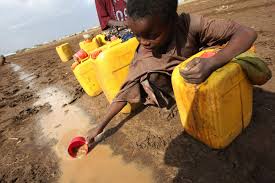
The draft IRMA standard should clearly reference the International Labor Organization (ILO) Conventions No. 138 on Minimum Age and No. 182 on the Worst Forms of Child Labor.

It should also explain that most child labor in mining such as work underground, work with dangerous tools, and work in an unhealthy environment that exposes children to hazardous substances (as defined in ILO Recommendation No. 190 on the Worst Forms of Child Labor) is hazardous and thus prohibited under the ILO Convention No. 182 for anyone under the age of 18.
images

Chapter 2.4 Human Rights Due Diligence and Compliance
Human rights impact assessments should also be required to take into account the specific impacts on women, children, the elderly, persons with disabilities, and marginalized sectors of society or the community. They should draw on disaggregated data to ensure analysis of the different impacts on marginalized groups.

The standard should also require staff carrying out human rights impact assessments to have expertise in relevant international human rights law and practice.

Further all potential environmental impacts and any other necessary technical analysis should be disclosed, to ensure that human rights impact assessments can addresses how these issues will impact human rights protections.

Chapter 2.5 Mining and Conflict-Affected or High-Risk Areas

In cases where a company has unintentionally or unknowingly contributed to violent conflict or human rights abuses, in addition to ceasing the offending actions, provision of remedies, and improving due diligence, the company should publish full details of all fees, ‘taxes’, compensation payments, community development funding and any other kinds of financial support that it was required to or did pay to the government or armed group involved in a conflict or abuses.

Chapter 2.6 Security and Human Rights

Risk assessments should pay particular attention to the impact of mining on women, including the potential for sexual violence, and to measures that would be effective in mitigating those risks.

Such measures could include training security personnel on prevention and response to sexual violence and the participation of female security personnel among security staff.

The annual reports should not only monitor and put on file complaints, but should also make public the number and nature of complaints received, as well as the time required to resolve each case, and their outcomes.

Chapter 2.10 Free, Prior and Informed Consent (FPIC)

As currently drafted, the standard is limited in that it only requires a company to initiate FPIC scoping prior to any land disturbance. This should be amended to:

Explicitly require companies not to undertake any activities until it has FPIC have been obtained. Exploration or any other activities should not continue while the FPIC process is ongoing; and Require a company to initiate FPIC scoping (and obtain FPIC) prior to undertaking any activities that may affect the lands, territories, livelihoods, culture, religion or other resources and property of indigenous peoples (including, for example, non-invasive exploration).

Rather than requiring the company to determine whether there are capacity issues, the standard should require the company to finance independent legal advice for indigenous peoples unless the affected peoples explicitly decline.

A community’s consent cannot be “informed” if the sole source of information is the company that wants to exploit resources on their land. The company should also involve national human rights commissions and independent NGOs.

The standard should require companies to identify any indigenous people that own, occupies, or otherwise uses land and territory before undertaking any activity, and identify any representative institutions of those peoples.

The requirement to determine, in collaboration with indigenous peoples, whether the affected peoples may be in need of other technical expertise and to identify social, cultural, economic, environmental, human rights and/or other assessments needed to determine the range of potential impacts is important. Participatory impact assessments are a key tool in this respect. The requirement should specify that all of this information is essential prior to consent being given.

The emphasis on the FPIC process being gender and age inclusive, and involving a broad cross-section of members of the indigenous peoples, and the peoples’ own representative institutions is essential. In addition, the requirement should specify the need for public meetings, to provide one more avenue through which individuals that may be excluded from the process can participate.

Chapter 2.12 Resettlement

The standard rightly mentions that there should be opportunities for the communities to improve their standard of living. However, these opportunities are not explicitly articulated in the “requirements” table; explicit requirements regarding minimum living standards should be laid down and drawn from human rights standards.

Further, the chapter focuses mainly on livelihoods, but fails to give equal attention to the rights to housing, education, health and development by considering that all persons, groups and communities have the right to suitable resettlement.

This includes the right to alternative land of better or equal quality; housing that satisfies the criteria for adequacy (accessibility, affordability, habitability, security of tenure, cultural adequacy, suitability of location); and access to essential services such as health and education.
The standard should specifically require companies to ensure that resettlement does not have an exacerbated adverse impact on marginalized individuals, including amongst others women and persons with disabilities.

The standard should also require companies to identify and respect all property rights over land and territories, including traditional and collective or community rights.

It should be ensured that stakeholder engagement is not limited to the resettlement design process, but also during the resettlement process itself, which can often take months or years.

Local government officials and independent experts should be present during the actual resettlement too in order to ensure that no force, violence or intimidation is involved.

Adequate and fair compensation for all losses and damages, including to property, social infrastructure, and all relevant conditions for resettlement should be prepared and ready by the time of resettlement to minimize disruption to affected persons, groups, and communities.

The section lacks any reference to grievance mechanisms and access to remedies. Complaints or grievance procedures should be in place before the actual resettlement starts. This should also include access to timely remedies.

Documents such as environmental assessments, periodic environmental monitoring reports, resettlement action plans, and updates on implementation should be made widely accessible, including by providing short summaries in non-technical language, translating the summaries and the full reports into local languages, posting them on the internet, and providing copies in public buildings such as local schools in directly affected communities.

Certification

The current certification system is not clearly explained in the standard, although referred to in the chapters. Given the importance of the matter, a more detailed elaboration of the actual process should be presented in the form of a separate chapter. From the available information it does not become clear whether the auditors would conduct on-site visits of all facilities and sites belonging to a company.

Human Rights Watch» (Washington, DC)

14 January 2015

Posted in Uncategorized | Leave a comment

Can it be stopped? Ghana’s forests ‘could completely disappear in less than 25 years’

Ghana’s forests are home to many threatened species, including western chimpanzees (Pan troglodytes verus). According to Global Forest Watch, chimpanzee range in Ghana lost approximately 10 percent of its forest cover from 2001 to 2013. This photo is of an eastern chimpanzee (P. t. schweinfurthii) in Uganda, by Rhett A. Butler.CHIMP

Ghana contains forests that are biologically unique and important both for the wildlife they contain and the human communities that depend on them. However, the country is experiencing one of the greatest rates of deforestation in West Africa. At its current rate of forest loss, a study estimates that Ghana could be devoid of major forest cover in less than a quarter-century.

An analysis published in Africa Initiative in January 2013 links deforestation to economic activities such as legal and illicit logging, clearing trees to increase arable land, fuel wood extraction and mining.
Author James Boafo states that forest resources play an important role in income generation and household food security in Ghana. Non-Timber Forest Products (NTFP) provide sustenance and revenue for about 2.5 million people in the West African nation. However, these resources are threatened by the country’s current rate of deforestation.

“Between 1990 and 2005, Ghana lost over a quarter of its total national forest cover (about 1,931,000 hectares of forest),” Boafo writes in the study. “At the current rate of deforestation, the country’s forests could completely disappear in less than 25 years.”

According to data from Global Forest Watch, the forested portion of Ghana with major tree cover comprises approximately 6.9 million hectares. Of that, more than 500,000 hectares were cleared from 2001 to 2013. In other words, in just over a decade, the country lost more than seven percent of its forests.

Nearly all of Ghana’s forest loss has occurred in the country’s southern region, an area defined by Conservative International as a “biodiversity hotspot” due to its high concentration of species found nowhere else that live under a high level of threat from human disturbance. Ghana contains portions of the Upper Guinean forests, a strip of tropical forest that extends from Guinea to Togo. Because of this, the World Wide Fund for Nature (WWF) lists the Upper Guinean forests as one of its 200 critical regions for conservation, and surveys into the region indicate that Ghana’s portions are among the most unique – and the most degraded. Even in the early 1990s, scientists estimated 80 to 90 percent of the country’s original high canopy forest had been wiped out.

Ultimately, deforestation in Ghana is due to demographic and economic pressures, policy and institutional lapses, increased infrastructural developments and technological advances. A study published in the International Journal of Geomatics and Geosciences in 2014 states that deforestation has been a major environmental issue in the country since the 1930s, specifically attributing its high rate to the disenfranchisement of local people in some areas due to colonialism.

The colonial forest policies of the past, for example, forcefully took forest lands from individual land owners and families,” the authors write. “Those affected by such colonial land policies resorted to exploiting the forest cover indiscriminately.”

In their paper, the authors state forest cover was exploited regardless of the negative effects. Agricultural expansion such as cocoa cultivation (50 percent) and wood harvesting are viewed as the main drivers. Mahogany has also been heavily targeted. According to a study published in the Journal of Basic and Applied Scientific Research in 2011, overexploitation of the country’s mahogany stocks have emptied forests of the species, raising policy concerns about management of forest resources.

The African Development Bank (ADB) describes Ghana’s annual deforestation rate as alarming, and has dedicated some of its resources to stemming it. “This shift has resulted in significant loss of forest cover and a decline in carbon stocks. The limited alternative livelihood opportunities pose another challenge for members of the community,” the bank states in a report issued December 2013

According to Global Forest Watch, Ghana lost more than 500,000 hectares of forest cover between 2001 and 2013, primarily in its southern portion. Map courtesy of Global Forest Watch

According to Global Forest Watch, the area pictured experienced a 10 percent loss in forest cover between 2001 and 2013. This includes Ghana’s only chimpanzee habitat in the extreme southwestern portion of the country. Map courtesy of Global Forest Watch

Steps in the right direction?

The African Development Bank has been a major financier in the forest sub-sector. Currently, ADB is funding a project geared towards enhancing carbon stocks. It has provided a grant of 9.75 million towards the project’s total cost of $15.8 million. The project approved in November 2013 and is expected to be completed in December 2018. The bank also is an implementing agency for the Forest Investment Program (FIP) for which it secured $42 million for investment projects in Ghana, Burkina Faso and the Democratic Republic of Congo. This project is aimed at increasing resilience to climate change, as well as tackling deforestation and forest degradation problems that currently threaten community livelihoods.

Abdullah Hamza, the Founder and Director of Agrointroductions, an organization focused on mitigating climate change and improving farm productivity, urges the need for civil society organizations to increase participation in assisting the government to sustainably manage their natural resources. The government, he suggests, should cooperate with organizations that seek to utilize concerted efforts to complement its attempts to secure Ghana’s remaining forest. Hamza proposes using commercial forest plantations instead of harvesting trees from wild forests. For agricultural options, he suggests agroforestry – a practice in which crops are grown within forests – may provide alternative strategies to currently unsustainable land use policies. However, even as Hamza offers suggestions, Boafo argues that attempts to address deforestation in Ghana have been hampered by lack of collaboration between stakeholders and policy makers.

“A more effective approach will require integration of sustainable livelihood activities into national forestry policies,” Boafo said. In order to tackle Ghana’s forest loss, Boafo recommends adoption of sustainable livelihood activities as measures towards mitigating the rates and impacts of deforestation on forest communities in Ghana. He also points out that in order to effectively deal with deforestation, the activities of forest-dependent communities must be included in national policy.

Notably, the government of Ghana has been making efforts to address the issue. In 2001it launched the National Forest Plantation Development Programme (NFPDP). According to an annual report, the program resulted in the planting of more than 135,000 hectares of forest from 2001 to 2008 despite criticism that implementation was hampered by lack of funding. In 2009, for the first time in eight years, the government updated the NFPDP with an aim of improving livelihoods through agroforestry.

Judy Ogutu, mongabay.com correspondent

Citations:

  • Adanu, S. K., Van Garderen, E. A., Lalley, J., Kofi, S., & Adanu, D. K. A. (2010). Forest cover change in ho municipality of the Volta region, Ghana.
  • Danquah, J. A., Appiah, M., Damnyag, L., & Pappinen, A. (2011). Population structure of African Mahoganies in four forest reserves: Implications for conservation and management in Ghana. Journal of Basic and Applied Scientific Research, 1(7), 539-554.
Posted in Uncategorized | Leave a comment

Sanitation Police to curb unlawful disposals?

solid waste

Ghana would soon generate 25,000 metric tons of waste daily as the population increases steadily says Professor Ernest Yanful of Kwame Nkrumah University of Science and Technology (KNUST).

The calculation is based on the average production of one kilogramme of solid waste per person daily.

He said: “We will produce more solid and liquid waste as we become middle income country because the richer you become the more you produce waste.”

Prof Yanful with the Africa Institute of Sanitation and Waste Management of the university, made this known in Accra, when he made a presentation on: “Social Accountability and Citizen participation,” at the ongoing annual New Year school in Accra.

Participants at this year’s school are discussing various topics centred on the theme: “Improving the Performance of the Local Government System in the Era of e-governance.”

Topics discussed so far includes; improving the performance of local government system in the era of e-governance, the state of local government reforms and the role of e-governance fiscal decentralization, and managing resources through e-governance

Prof Yanful said there is the need for the nation to create awareness among the citizens about waste management issues.

He lauded accountability, saying it is good because it ensures transparency, improves governance and enhances development.

He said accountability enables citizens to ask questions and demand answers.

Prof Yanful noted that in many countries waste management is tied to property tax and government assesses the revenue on the value of the citizen’s home and called on Ghanaians to build businesses around waste management.

He also called for capacity building at the district assemblies.

Prof Yanful said KNUST has introduced a programme in environmental engineering.

GNA

With the recent introduction of a first Saturday of each month as a sanitation and cleaning day, many are of the view that the introduction of sanitation police will enforce many of our abandoned local government bye laws on unlawful disposal of sewage. These offences are punishable by fines and imprisonment. Do you think we should re institute sanitation police to check and bring into prosecution many of residents who are culprits of these offences?

Posted in Uncategorized | Leave a comment

RENEWABLES: THE BEST VALUE ENERGY SOLUTION

RENEWABLES: THE BEST VALUE ENERGY SOLUTION
27/11/2014 COP20 1 COMMENT
By Adnan Z Amin, Director-General, International Renewable Energy Agency (IRENA)

As the urgency rises in our quest for answers to the climate change challenge, we can take heart from one remarkable piece of good news: renewables have become the best value energy for areas off the grid everywhere. In other words, technologies that were once considered “alternative” are proven to be viable and have become mainstream. Now, we need to take bold steps to increase the share of renewables in the energy mix.

Over the past five years, renewable energy has become cheap. The cost of solar panels has fallen by 75 per cent. Onshore wind has become the least-cost option for new grid supply in many countries worldwide – even in countries with cheap shale gas, such as the United States. The falling cost of renewable energy heralds a transformational turn of events, whose importance is still not fully realised. What it means is that we have a viable answer to rising greenhouse gas emissions, which not only allows us to meet our present and future energy needs, but does so potentially more cheaply than using fossil fuels.

How often do we face a serious crisis and then find that the solution makes us wealthier and healthier in the process? This is a genuine breakthrough, which presents us with a clear objective. Our job is to move renewable energy from the mainstream to the majority as soon as possible.

It is worth repeating some basic facts. By 2030, our planet will be home to 8 billion people. They will be richer and they will want to buy more things. Middle class spending is expected to soar, from US$21 trillion to $56 trillion annually. Under business-as-usual scenarios, the consequence of all this activity is clear. Energy demand and emissions will grow, and they will do so in a way that causes catastrophic climate change.

So how do we stop this? The answer seems clear. More than 80 per cent of human-caused emissions of carbon dioxide come from burning fossil fuels. We need to use energy more efficiently, and we need to replace fossil fuels with renewables. The good news is that this is entirely within our grasp.

CHEAPER TO ACT THAN TO DELAY

IRENA analysis shows that we already have the technology and the know-how to double the share of renewable energy by 2030, from 18 to 36 per cent. But in fact, since half of today’s renewable energy still consists of traditional biomass uses, which is unsustainable and entails pollution and health risks, we need to quadruple the use of modern renewables, including sustainable biomass and biofuels. The even better news is that under the REmap 2030 initiative, IRENA has worked out that we can do this more cheaply than not doing so – when we take into account the cost of pollution, including ill health,environmental degradation and carbon emissions.

“How many crises do we face, where the solution makes us wealthier and healthier in
the process?”

These developments have not gone unnoticed, and the process of transformation has already begun. Renewables last year accounted for more than half of new global power capacity, and investment in new renewable power capacity has outpaced investment in new fossil-based power generation for three years running.

Governments everywhere are beginning to act. China increased its installed photovoltaic (PV) capacity in 2013 to 13GW, about one-third of the world market. It now accounts for half of the global hydro and PV market, and hosts 90 per cent of world solar thermal and biogas capacity. And there are plans to accelerate this transition further.

Regulation in the US is acting as an effective brake on coal investments. Italy already produces 8 per cent of its electricity from solar PV. Germany has raised the share of renewables in power generation from 5 to 30 per cent. A growing number of island nations have completely converted to renewable power, or will do so in the coming five years.

The shift to renewable energy is effectively underway. And the more we invest, the cheaper it gets. This allows us to cut the Gordian knot of climate diplomacy, in terms of who pays and who benefits. With renewable energy, we all invest, and we all benefit. The stalemate between developed and developing countries disappears when the best route to reducing carbon dioxide emissions is also the best strategy for economic growth.

So why worry? If renewable energy is so obviously the solution, will markets not take care of the transition organically? The unfortunate answer is that, if business continues as usual, they will not.

THE REAL ENERGY PICTURE

Unless governments and policy-makers take urgent action, catastrophic climate change will be unavoidable. IRENA forecasts show that instead of doubling the share of renewables, we will reach only 21 per cent, an increase of just three percentage points and far from sufficient to mitigate the trend of global warming. There are three main reasons for this worrying scenario.

Firstly, there is not a level playing field. The world currently subsidises fossil fuels to the tune of more than US$500 billion a year, and that number is rising. This dwarfs support for renewable energy by a factor of five. At the same time, we do not adequately account for the cost of pollution on our balance sheets. By giving fossil fuels a free pass for the damage they cause to our health and the environment, we are effectively subsidising them even further: eighteen times more than we subsidise renewables, according to the International Monetary Fund (IMF).

The second reason is that too much attention is focused on power generation. Countless column inches are given to how we get our electricity. But more than three-quarters of the energy we use is in the form of heating and transport fuels. Much more attention needs to be focused on these areas: green buildings, electric cars, biofuels for industry and so forth.

Thirdly, a world living on renewables looks very different from the world market, including retailers, technology companies, community organisations and private individuals. This has caused incumbent utilities to increasingly worry about their future. Some are responding by trying to maintain the status quo; others are fighting to keep their subsidies. This puts a brake on the global energy transition.

URGENT STEPS TO PROSPERITY

The world has switched energy systems before, and in doing so has enjoyed great leaps in prosperity. The paradigm shift to modern renewable energy will happen, one way or another. But as of now, it won’t happen fast enough to avoid serious damage to our climate. We need to speed things up.

We are extremely fortunate, in that the falling cost of renewable energy has given us a choice. We can avert catastrophic climate change, and we can start by doubling the global share of renewable energy by 2030. In so doing, we will also create jobs, lower healthcare costs, and spread economic prosperity more widely. But to make that choice is not easy. It requires urgent, bold steps, from leaders willing to take the short-term hits from those who would rather carry on with business as usual. It will be a battle.

But it is a battle we simply cannot afford to lose.

Adnan Z Amin was elected as Director- General of the International Renewable Energy Agency (IRENA) in April 2011. A Kenyan national, he is a development economist specialising in sustainable development, with over 25 years of experience in the fields of international environment and sustainable development policy. He served as Head of the UN System Chief Executives Board for Coordination (CEB) Secretariat.

Mr Amin also served as the Executive Director of the Secretariat of the Secretary-General’s High Level Panel on UN System-wide Coherence. Previously, he had been Director of the New York Office of the United Nations Environment Programme (UNEP) and Special Representative of the UNEP Executive Director. He played the lead role in supporting the ministerial level intergovernmental process to review International Environmental Governance and UNEP’s participation in the World Summit on Sustainable Development. He has also served from 2000 until 2006 as a Trustee and member of the Board of Directors of the World Conservation Monitoring Centre, Cambridge, UK.

The International Renewable Energy Agency (IRENA) is an intergovernmental organisation that supports countries in their transition to a sustainable energy future and serves as the principal platform for international cooperation, a centre of excellence, and a repository of policy, technology, resource and financial knowledge on renewable energy.

IRENA promotes the widespread adoption and sustainable use of all forms of renewable energy, including bioenergy, geothermal, hydropower, ocean, solar and wind energy in the pursuit of sustainable development, energy access, energy security and low-carbon economic growth and prosperity. With over 130 states and the European Union as members, and active participation by many more signatories and applicants for membership around the world, IRENA helps countries achieve their clean energy potential and promotes renewable resources and technologies as the key to a sustainable future.

Posted in Uncategorized | Tagged , , | Leave a comment

Africa Mini Grids Summit

approved banner(974px)

The Potential of Mini Grids

The IEA has estimated that in order to achieve universal electricity access, mini-grids will have to provide around 40% of new capacity by 2030, with the largest percentage (187TWh) needed in Sub-Saharan Africa.*(WEO, 2010).

Alternative_Energies

Why Mini-Grids
Some of the benefits of mini-grids:
Grid-based rural electrification is clearly inadequate
Mature technologies with decreasing CAPEX costs that can utilise local and readily available sources of renewable energy
Mini-grids support productive and business activities while Solar Pico Systems and/or clean improved cook-stoves cannot
Technically capable to feed electricity to the main grid plus smart metering and energy distribution
Better energy-management and user awareness than national grid
The Four Main Aspects of Mini Grids to Evaluate
1. Technology
Two basic elements of mini grids technology
Power generation/storage system that creates and stores electricity from different sources such as PV-solar,wind, hydro, biomass, diesel etc;
Distribution system that carries electricity, meters and bill end users if required

Main Trends/Issues
Due to difficulty of providing enough electricity with just a single source of energy or high OPEX, there has been a recent increase in hybrid systems where 2 or more sources of energy are used, sometimes capable of providing power 24/7.

2. Economics
This aspect is the least developed and sometimes the most challenging part of mini-grids implementation
4 main types of Business Models used
Utility-Model – Generation and distribution through public utility
Hybrid Model – Generation through IPP, distribution through public utility
Private Model – Generation and distribution through private party
Community Model – Generation and distribution in the hands of the local community

Main Trends/Issues
The lack of technical and investment capacity to manage projects effectively plus inadequate regulations and policies framework continue to hamper the sound implementation of the business models.

3. Regulations
The business model and cost alternatives for mini-grids will be fundamentally different from grid-based electricity business models.
Policy frameworks must balance between concerns of 3 aspects:
End-user concerns: It is essential for Mini-grids to identify payment methods that provide fair deals for consumers
Grid operator concerns: Grid operators/owners need to recover operating costs as well as maintenance and repair costs
National Government concerns: Governments seek to maximize electricity access and minimize the costs for electricity users.

Main Trends/Issues
Many African countries still have no clear or dedicated regulations for offgrid solutions but an increasing number are consulting other stakeholders to come up with a thorough framework to support sound business models.

4. Social & Environment
The end-users are more in contact with the mini-grid system than in the conventional power generation approach.

MainTrends & Issues
Including the community as an active element in the Mini-grid operation is essential to make it sustainable and reduce the rate of abandonment but this is often difficult and requires continuous capacity building and awareness efforts.

The above issues and more will be dissected and discussed in greater depth at the Africa Mini Grids Summit. Key decision and policy makers along with the power players in the mini grids sector will share their invaluable expertise and experience to help you effectively strategize your mini grid blueprints.

Be treated to a first class event where pressing issues and solutions are brought to the fore and extraordinary networking opportunities are aplenty.

For more information on registration for the summit.

Contact: Desmond Amankwah

Grenotek Energy and Environmental Services

O543438766

Accra.

Posted in Uncategorized | Leave a comment