Sanitation Concern in Kasoa,Accra Ghana

On 28th November, President John Dramani Mahama commissioned the Kasoa interchange Project. It was lit. A drone footage in the night casts the whole project.Barely three weeks after the commissioning, our team decided to visit the Kasoa interchange to access the project.

The first phase of the project is duly completed which has effectively resolved the traffic situation in the old market. Vehicles traveling towards Cape coast uses the overhead .Whereas the trotro and taxis use the ground route. I noticed work on the project has been stalled. A clear indication of a change in governance.This portrays lack of clear policy direction and weak institutions in our country Ghana.

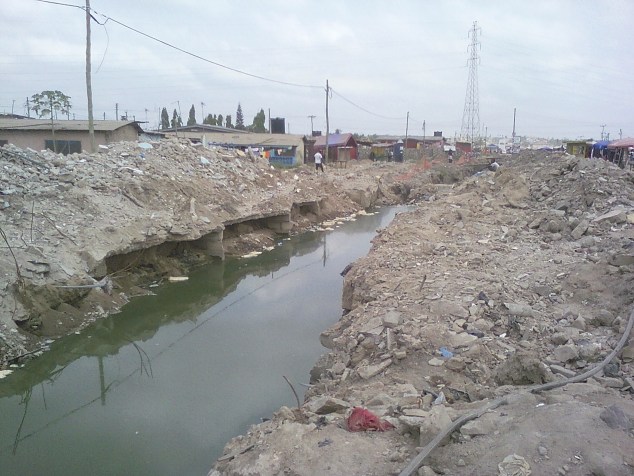
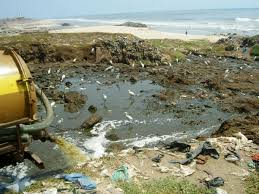
We decided to move toward the taxi and lorry station. And here we found an environmental mess and potential death traps.The drains being constructed have turned into a dirty faecal pool of water. We observed some people use it as a toilet facility.

Exif_JPEG_420

Exif_JPEG_420

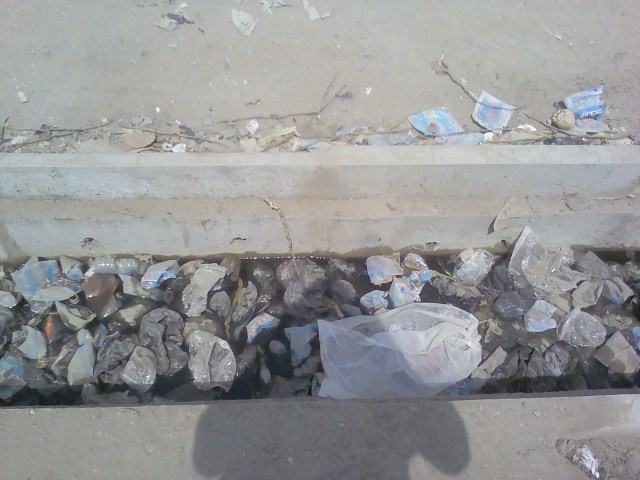
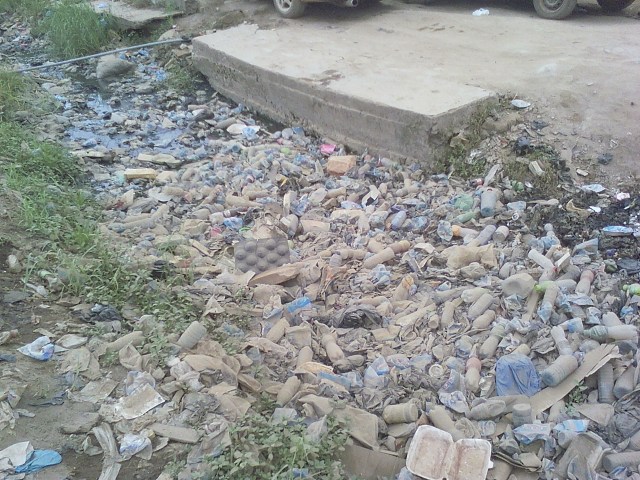
Alongside is a deep abandoned drain chamber. Its deep and uncovered. why we would wait for a disaster before we take actions whereas we could prevent such? The drain has been very much littered with polythene and thence chocked. I can only imagine the intense of flooding in this area in a heavy downpour.

And this is an area of business activity.Now the question; Has those working around the zone any obligation to clean up? We asked the station master of the taxi rank who refused to speak on camera and he responded that “it is the work of the government to make sure the gutter is clean because they were doing the road not me”.

Exif_JPEG_420

Exif_JPEG_420

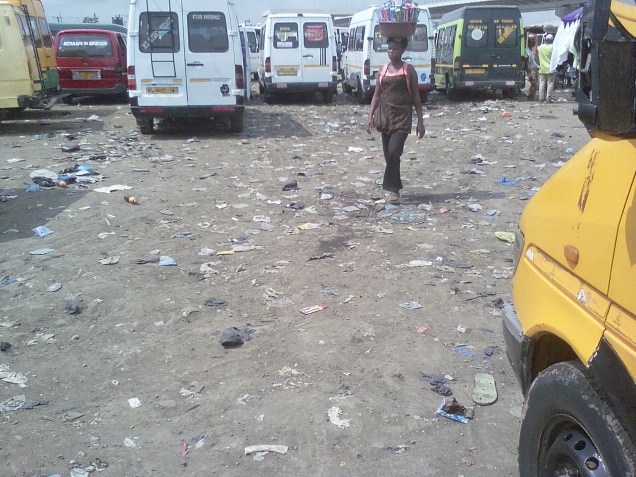
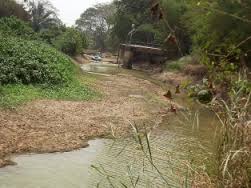
At the lorry stations, the situation was no different. It is evident that these polythenes and plastics are as results of irresponsible behaviours of pedestrains and the city authorities on their part to curb the exacerbating situation. It must be noted however that no garbage bin has been seen anywhere in the course of this investigation.

Exif_JPEG_420

Exif_JPEG_420

Exif_JPEG_420

Exif_JPEG_420


Exif_JPEG_420

Exif_JPEG_420

We decided to visit two major departments in the metropolis. First the Kasoa Urban council. The departments office is just around the roundabout. A visit to the department showed no activity of personnel and any commitment towards arresting the sanitary conditions of their environment.I must say it is more geered towards tax collection than ensuring a tidy and clean municipality.

Exif_JPEG_420

Exif_JPEG_420

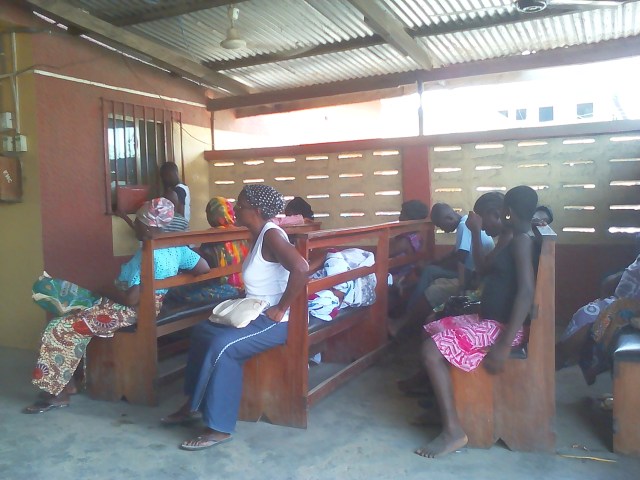
We then headed to the Kasoa polyclinic which is adjacent the urban council to have a look at the situational effects. It is obvious that Malaria which is a prevalent case at the Out Patients  department could be avoided by active concern for tidiness and clean environment in the old kasoa market area. A visit to the Environmental health and sanitation unit of the hospital shows similarly lack of activity as the offices have been closed as at 10 am.

Exif_JPEG_420

Exif_JPEG_420

Questions we need answers to:

1. Do our local institutions receive adequate funding from the national budget? It is clear in the fact that the institutions lack the logistics and personnel to curb the situation

2.Should Environmental service companies be contracted directly for municipal sanitation? Yes it should competitive and open to all to all other Environmental service companies in the country.

It is clear in the fact that institutions lack the logistics and personnel to curb the situation.Whereas Environmental companies should be involved,the selection of such companies should be competitive to ensure effectiveness in task.

Watch the video on the investigations here

https://youtu.be/P5Dfg2iJFHY

Posted in Uncategorized | Leave a comment

Obuasi takes measures to improve on Environmental Sanitation

The Obuasi Municipal Assembly has stepped up efforts at improving environmental sanitation in the municipality with the completion of a GH¢200,000.00 water closet toilet facility for the twin-community of Bogobiri and Nkamprom.

This was constructed under the built-operate-and-transfer arrangement.

Inaugurating the project at a ceremony, Mr. J.F.K. Addai, the Presiding Member, said promoting proper sanitation was a major priority of the assembly.

This, he said, was vital to the fight to prevent diseases – to keep the population healthy and productive.

He called for the people to show ownership for the facility by making sure that it was kept in good condition at all times.

Mr N.A. Frimpong, the Municipal Environmental Health Officer, advised the people to keep their surroundings tidy.

He said personal hygiene combined with a healthy environment, would help them to cut down the visit to the hospital.

Mr. James Adabor, the assembly member, said the project was a dream come true.

Source: GNA/News Ghana

Posted in Uncategorized | Leave a comment

‘Lavender Hill’ to go by end of 2016?

The use of the ‘Lavender Hill’ as a liquid waste disposal site will cease by the end of this year, the Minister of Local Government and Rural Development, Alhaji Collins Dauda, has announced.
That, he explained, was because two new waste treatment plants were to come on stream by August. The two new plants are the Waste Water Treatment Plant, which is being constructed on the premises of the Accra Compost and Recycling Plant (ACARP) at Adjen Kotoku, and the Mudor Faecal Treatment Plant adjacent the famed ‘Lavender Hill’ in Accra, where liquid waste is discharged without treatment into the sea.
download
Alhaji Dauda announced this after touring the two plants in Accra yesterday. Whereas the Mudor Faecal Treatment Plant is expected to be operational by March this year, the Waste Water Treatment Plant will come on stream by August.

The two waste treatment plants will cater for the contents of 260 cesspit emptiers daily. Public/private partnership Addressing journalists after the tour, Alhaji Dauda said although efforts were being made by the government to treat liquid or faecal waste, ‘Lavender Hill’ remained a challenge.

“We do not support the discharge of raw liquid waste into the ocean; we don’t like it, we abhor it; but it is difficult to address it with government intervention alone. It requires a huge investment to be able to address the situation.

“As a result, we are taking advantage of the government’s public/private partnership (PPP) policy and so the government, in partnership with Zoomlion, is undertaking two major projects at Adjen Kotoku and at the Mudor Plant,” he said.

He stated that the interventions to address liquid waste disposal were not only limited to Accra but that after completion of the two waste plants, similar projects would be sent to the other regions using the PPP model. The Mudor Faecal Treatment Plant is being constructed at a cost of $35 million, while the total investment at Adjen Kotoku is $9 million.

However, Alhaji Dauda said the government and Zoomlion Company Limited were still in the process of finalising the partnership agreement. Response to “Lavender Hill” The Managing Director of ACARP, Dr Richard Amponsah, said the faecal treatment plant at Adjen Kotoku was designed to receive, process and treat faecal waste from the Accra metropolis, municipalities and districts.

He said the plant was a direct response to the unacceptable practices at ‘Lavender Hill.’ He said the capacity of the plant was 1,000m3 of liquid waste a day, while the treated water from the plant could be used for aquaculture, construction, watering of plants, among other uses.

This story was first published by the Daily Graphic on February 4, 2016

Posted in Uncategorized | Leave a comment

Funding for Sanitation and Environmental Businesses

A new project named, “Catalysing WASH from Possible to Profitable” (P2P) is about to change the lifes of people seeking funding for sanitation and environmental businesses. It is an innovative access to finance project for water, sanitation and hygiene (WASH) under the Ghana Netherlands WASH Programme (GNWP).
SNV the development agency is providing funding with very low interest to prospective clients worth more than 6 million Euros.
These funds will be accessible from Microfinance Institutions.
With my knowledge and experience in financing environmental projects, I  wrote this piece as a guideline to Microfinance Institutions and individuals seeking access to the funds.
water

A GUIDE TO AN MFI “WASH” LOAN PRODUCTS

1.0 EXECUTIVE SUMMARY

This guideline is aimed at providing information on access to water, sanitation and hygiene loan products offered by Microfinance Company Limited. These guiding principles should be strongly aligned with water.org’s credit models[i] and the credit policy manual. It is not a policy document but a resource to credit officers, Independent “WASH” service providers and individuals applying for WASH loans.

1.1 INTRODUCTION

An estimated 87 percent of Ghana’s 25 million inhabitants lack access to proper sanitary facilities and diarrhea remains one of the leading causes of death among children under five in Ghana[ii]. As rural populace face lack of access to safe drinking water, urban migration has contributed to poor sanitary and unhygienic conditions in the cities of Ghana.

In towns such as Nima, Madina, Mallata and Newtown in Accra, the majority of the people living in urban areas reside in compound (shared) houses, most commonly using shared toilets or with no toilet facilities of any kind. Households living in Madina, Adenta are forced to rely on secondary and tertiary water vendors who sell water from tankers whilst an increasing number of Ghanaians are also relying on sachet water for drinking. Access to WASH products is a basic human right according to the United Nations (UN Millennium Development Goal 7).Poor households are willing to pay for subsequent WASH products but may not afford the upfront investment. Appropriately designed loans can help households finance upfront costs including materials, labour etc. and repay over time.

1.2 MODEL/WORKFLOW

All applications for WASH loans shall be categorized under core themes as:

  1. WATER– for the purposes of bore hole drilling, borehole mechanization, pipe connection, household plumbing works and protected hand dug well etc.
  2. SANITATION– for the purposes of construction of septic tank, household improved latrine, desludging of liquid waste and purchase of waste bin etc.
  3. HYGIENE- for the purposes of construction of household bath, soak away, hand washing facility, pest control and fumigation etc.

All WASH loan applications should undergo similar reviews and assessment procedures similar to an enterprise loan application following the MFI credit policy manual

Purpose: The “WASH” loan product is designed to help low income households to finance their water, sanitation and hygiene needs. Applicant(s) for “WASH” loan should be able to show a clear purpose and use of the credit. The design should be clear, simple and be able to answer the following:

  • What does the improvement look like?
  • How much does it cost?
  • What types of materials and labor is needed to build it?
  • How long will it take to build?
  • Will this improvement work for the clients’ home (i.e. what space/existing infrastructure is required)?

The applicant(s) should be able to demonstrate ability to pay back loan amount and interest.

Amount: The loan amount requested/granted will depend on the estimated cost of the “WASH” product needed by applicant(s).The amount should be able to complete the project for immediate use by the client. For example, a loan request for water connection should include upfront connection cost fees, plumbing materials and labour expenses. The client will need to provide a proof of the amount by an invoice from a supplier, a contractor or Ghana Water Company Limited. For Independent Water, Sanitation and Hygiene Providers, the loan amount and structure will fairly depend on their business size and cashflow.

Pricing: The interest rate for “WASH” product financing shall be 17% interest rate per annum.A one-time 5% charge on the amount requested shall be charged for purposes of loan processing and insurance fees. All default loans may be charged a 10% penalty charge on principal amount.

Term: The duration for final repayment shall be a maximum six (6) months up to on twelve (12) months. This shall be considered after discussion and agreement between the applicant(s) and the Microfinance Limited.

Lending methodology: In order to ensure effective repayment of loans, several methods of guarantee such as collateral security (individual), joint liability guarantee (households) and personal guarantor will be sought from applicants. In most cases, the applicant(s) will be required to deposit 20% of the cost of project as deposit security. The client identifies the “WASH” product supplier (or contractor) and provides a cost estimate to the MFI with their loan application. The MFI conducts the loan appraisal, approves the loan, and issues the client a cheque for the loan amount in the name of the supplier. The supplier delivers the product directly to the client, or the client may arrange for their own transportation. Jireh microfinance verifies the delivery and installation. The client then repays the loan directly to the MFI.

In order to ensure quality and timely delivery of materials and work by the supplier or contractor, a contract agreement between the client and the supplier may be requested before disbursement of cheque.

Eligibility: Existing clients of the MFI will be preferable. Applicants who demonstrate ability and willingness to pay will also be considered for the “WASH” loans.

1.3 MARKETING APPROACH

Having access to proper water and/or sanitation facilities can be lower on the list of a customer’s priorities when compared to things like medical costs, food and education, we cannot expect the “WASH” financial products to create demand by itself, no matter how well designed it is. They need to be promoted with a thorough selling and marketing strategy. Awareness for the “WASH” loan products shall be carried out by creating awareness of needs of basic water, sanitary and hygienic environment to healthy living. Targeted clients shall be households without a piped water connection, water shortage areas, and households without a flush water closets etc.[i]. The awareness and education shall be carried in partnership with local community residents and leaders, Independent “WASH” providers and suppliers, Public utility companies, government agencies and ministries.

 If you have any interest in accessing this loan facility. Please contact 0543438766.

Thank you


[i] ISF-UTS (2014), Financing Sanitation for Cities and Towns: Learning Paper. Prepared for SNV Netherlands Development Organisation by Institute for Sustainable Futures, University of Technology Sydney


[i] Watercredit.org(WASH Tool kit )

[ii] World Water Council (2011). Water for Growth and Development in Africa. WWC, Paris
Posted in Uncategorized | Leave a comment

ACEP disagrees with PURC on energy savings

The Africa Centre for Energy Policy (ACEP) has dismissed assertions by the Public Utilities Regulatory Commission (PURC) that the reduction in power usage was as a result of an improvement in energy conservation.

Instead, ACEP explained that some industries had shut down while consumers who could not afford the high tariffs had shifted from using electricity, and this accounted for the 300 megawatts that had been saved.

The Deputy Executive Director of ACEP, Mr Benjamin Boakye, in an interview on February 17 said ACEP’s analysis showed that other reasons accounted for the drop in demand and not necessarily because of the high tariff that was introduced.

“The reality is not because people are conserving energy. Per our analysis, demand has dropped because some companies have moved to Ivory Coast and we are all aware of this. Some industries have shut down, and consumers who cannot pay are no more using electricity,” he said.

Efficiency only in homes

“In Ghana, 60 to 70 per cent of electricity is consumed by industry, and industry cannot be efficient without investing in equipment so if you have a company that processes steel, they cannot change their equipment just because the PURC has increased tariffs,” he said.

Rather, efficiency, he said, was being seen in households, which virtually did not consume majority of the power generated.

“At the level of efficiency, you can only talk about homes where we use it to power our lights, freezers and others, and even that, what we constitute is only about 30 per cent and the drop is more than 30 per cent, so you cannot attribute that to just efficiency,” he said.

That, he said, therefore meant that, those industries and household consumers were not consuming power and therefore rationally, there would be some gains as power that was being generated would be enough to meet demand.

“PURC thinks we are being efficient without basis, but there is evidence to show that some companies are not working, and a typical one is the Cocoa Processing Company (CPC). If you have at least five companies not operating, in effect they are not consuming power and that is the reality and not because people are conserving,” he said.

Assumption without basis

According to the PURC, power consumed by consumers on a daily basis had dropped by a total of 300 megawatts, since the introduction of the new utility tariffs that saw a 59.2 per cent increase in electricity.

It, therefore, interpreted the reduction in power usage as an improvement in energy conservation by consumers, because people voluntarily switched off their electrical appliances because the tariffs had sky-rocketed.

Although the country is no longer shedding power, high tariffs have compelled people to switch off their appliances to save their units from running out for the pre-paid customers and not to pay huge bills for post-paid customers.

Mr Boakye explained that, the PURC’s assertion was not on any research or empirical basis, but it was only comparing generation against demand, and with the reasons already outlined there would definitely be some gains.

“They haven’t done any research and there was no empirical basis for saying that. They are only comparing demand against generation and once what we are generating is enough to meet the demand, they assume people are being efficient,” he said.

Posted in Uncategorized | Leave a comment

Water shortage in Ghana.

Residents of Nsawam Adoagyiri in the Eastern Region are battling an acute water shortage which has hit the area due to the drop in water treatment plant reservoir.

The residents will now have to pray for rains to increase the water level in the dam or continue to use polluted water from other sources.

Joy News’ Emefa Atiamoah was in the area and reports that for more than two weeks the municipality has not seen a single flow of water through their taps.
Their only source of water supply is an outlet from the Densu River.
Residents fetch water from the stream, boil it before they use for cooking and drinking.

water sh

“It is this same water we use to wash, other people bath in it with soap. Some people don’t even boil it they just drink it like that,” one resident told Emefa.

What has further worsened the plight of residents is the drying up of the water treatment plant reservoir.

The drying up of the plant has been attributed to the harmattan.
Communications Manager at the Ghana Water company, Stanley Martey in an interview with Joy News indicated that there’s very little the company can do at least for now.

The only option is to provide water to essential service providers like hospitals and schools.

This he said will be done in collaboration with the National Disaster Management Organization (NDAMO) and National Security.

He also indicated that since the community was a big one it will be difficult to supply water to all residents, but “water tankers will be placed at vantage points for the residents.”

Stanley Martey accused residents of polluting the water with rubbish and this in his view contributed to the current situation.

water w

He said until “the rains come in and the water level goes up, it will be very difficult to extract the water and treat it for consumption.”

Source: myjoyonline.com

Posted in Uncategorized | Leave a comment

World largest solar technology in Morroco

World’s largest concentrated solar power plant opensProject could power one million homes by 2018

(CNN)Morocco has switched on what will be the world’s largest concentrated solar power plant.

image

The new site near the city of Ouarzazare — famous as a filming location for Hollywood blockbusters like “Lawrence of Arabia” and “Gladiator” — could produce enough energy to power over one million homes by 2018 and reduce carbon emissions by an estimated 760,000 tons per year, according to the Climate Investment Funds (CIF) finance group.

As His Majesty Mohammed VI of Morocco pressed a button on 4 February 2016, the first phase of the three-part project was set in motion.
Harnessing the power of salt

The solar plant, called the Noor complex, uses concentrating solar power (CSP) which is more expensive to install than the widely used photovoltaic panels, but unlike them, enables the storage of energy for nights and cloudy days.

Mirrors focus the sun’s light and heat up a liquid, which, when mixed with water, reaches around 400 degree Celsius. The steam produced from this process drives a turbine and generates electrical power.

A cylinder full of salt is melted by the warmth from the mirrors during the day, and stays hot enough at night to provide up to three hours of power,according to World Bank, who partially financed construction of the plant through a $97 million loan from the Clean Technology Fund.

Africa has tremendous potential for solar generation that remains largely untapped.

Sameh Mobarek, World Bank project manager

“With this bold step toward a clean energy future, Morocco is pioneering a greener development and developing a cutting edge solar technology,” said Marie Francoise Marie-Nelly, World Bank Country Director for the Maghreb.

“The returns on this investment will be significant for the country and its people, by enhancing energy security, creating a cleaner environment, and encouraging new industries and job creation.”

Setting an example
Imported fossil fuels currently provide for 97% of Morocco’s energy need, the World Bank says . As a result the country is keen to diversify and start using renewable energy.

This goal was one of the reasons that Morocco was chosen to host the next United Nations climate change conference (COP 22) in November 2016, according to the CIF

“Africa, in general, and North Africa in particular, have tremendous potential for solar generation that remain largely untapped,” Sameh Mobarek, Senior Counsel and World Bank’s project manager told CNN.

“Morocco’s leadership in this area may provide the model for other countries to follow in pursuing development of their energy sectors in a sustainable manner.”

Lasting impact

As well as lowering carbon emissions and dependence on fossil fuels, this plant is expected to increase the share of renewable energy in total electricity generation from 13% to 42%, according to CIF.

It is also hoped that the project will positively impact the surrounding area. Approximately 583,000 people live in Ouarzazate town 10km (6.2 miles) from the site.

The poverty rate there is 23% but the hope is that the cleaner energy and better supply will reduce the occurrence of flickering lightbulbs and malfunctioning hospital equipment.

Posted in Uncategorized | Leave a comment

The Mess in the Odaw River,Accra

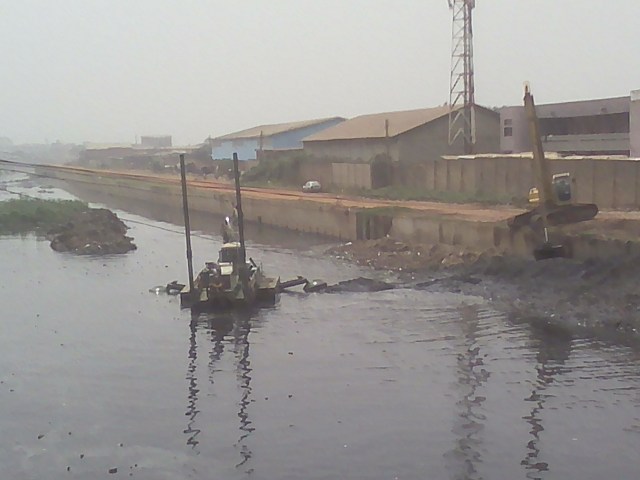
Good decision-making about how we manage the waste we create is one of the most important contributions humanity can make to reducing its impact on the natural world. This has not been the case by city and municipal authorities in managing waste in the city of Accra. Every year Ghana suffers from seasonal flooding. In Accra, as in many other places, drains blocked by plastics and other wastes are an important factor in this. Due to a lack of organized collection, many people simply dump their solid wastes, some of which gets washed into the drains. Floods in 2011 incurred loss of life and damaged or destroyed livelihoods and economic value. Fourteen people were killed, 43,000 were affected, and 17,000 lost their homes, with damage to roads, waterways and bridges also reported. In addition 100 incidents of cholera were identified a week after the flooding occurred.

Exif_JPEG_420

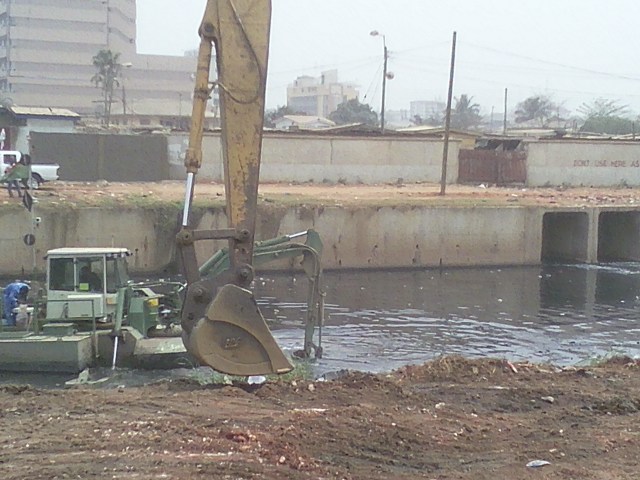
Dredging in the Odaw River Photo Credit :Author

In  June, 2015 after an intense rainfall led to severe flooding in Accra, more than 200 people lost their lives in the Kwame Nkrumah Circle flood incidence.

The Agbogbloshie dumpsite in the city is considered among ten most polluted dumpsites in the world according to Waste Atlas Partnership 2014 report.

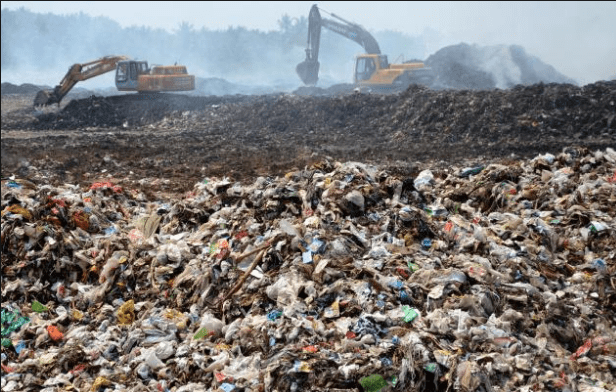
Plastics and Polyethane bags are more common materials that seem to choke our shallow drainage systems. It’s painstaking that on purchase of Porridge and doughnuts of Ghs 1.00 value (popular breakfast in Ghana) more than three pieces of polyethane bags comes with it which mostly ends up inside our drains. One might be tempted to conclude that implementing taxes on plastics and polyethane products imported into this country is more plausible than taxation on consumables.

Exif_JPEG_420

Dregding in the Odaw River Phot credit: Author

As renewed efforts to keep the capital city clean, the largest drainage system in Ghana, the Odaw river is being desilted of garbage and magnitude of sand and debris on the river bed. This will lead to free flow of most drains in the city. This is not the first of its kind. Meanwhile these efforts are meaningless if there is not a fundamental change in populace behavior and waste and sanitation policies governing the city. Majority of the waste present in the Odaw river is washed down from many smaller drains which ends on the Odaw river. I am sure many of us would like to debate on the quantum of contract price awarded for this dredging project. It is relevant that local and municipal assemblies provide effective means of waste disposal systems and transportation to landfill sites. Many municipal and District Assemblies simply have but one or none of waste collection vehicles in their assembliessolid waste

Most countries have benefited a clean city by adopting “polluter pays principle” in dealing with waste management. A case is in the Republic of Kiribati, the largest small island in terms of ocean territory; a beverage container deposit system has been operational since 2004. Under this system PET bottles and Aluminium cans have an AUD 0.05 (5 cent) levies paid on them at importation and collected by the Ministry of Finance and Economic Development (MFED). This cost is passed on through the commercial system to the consumer – who upon returning the empty beverage container at a collection point receives AUD 0.04 (4 cents) back. One cent as ‘handling fee’ is for the recycling operator to make the operation viable. In Ghana, in order to get disposal under some level of control, additional responsibilities should be extended to producers and importers of plastic products. Ghanaians should be informed and educated on the relevance of waste segregation. This is a low cost technology and recovers value from waste by converting organic waste into compost and valorizing recyclable materials, while providing livelihood opportunities to the urban poor.

Many people have shared their opinion on the recent dredging works in the Odaw River.

Check out the opinions of some people on the Odaw river dredging.


Posted in Uncategorized | Leave a comment

Call for Applications for the 2016 SEED Awards

Call for Applications for the 2016 SEED Awards Tue, Jan 26, 2016

Green Start-up Enterprises Can Submit Their Candidacy by 21 March 2016

Nairobi, 26 January 2016 – Start-up enterprises that solve pressing local issues by integrating social and environmental benefits into their business models can apply for the 2016 SEED Awards, which opened for nominations today.

Winning enterprises will receive a tailor-made business support package. Over a period of 6 months, they will be offered expert advice on further developing their business plans, individual workshops targeted at their needs, high level profiling of their enterprises and access to an international network of businesses, governments and development institutions.

Selected by an independent jury of international experts, winners will receive their awards at the International Awards Ceremony during the SEED Africa Symposium to be held on 28 29 September 2016 in Nairobi, Kenya.

This year, the SEED Awards include up to:

  • 15 Switch Africa Green-SEED Awards for enterprises in Burkina Faso, Ghana, Kenya, Mauritius, South Africa or Uganda. Supported by the SWITCH-Africa Green project, which is implemented by the United Nations Environment Programme (UNEP) with the assistance of the European Union;
  • 4 SEED Africa Awards for enterprises in Malawi, Mozambique and Namibia. Supported by the Government of Flanders;
  • 1 SEED Gender Equality Award to an enterprise, run or owned by a woman or women, that prioritises women’s empowerment and is located in Kenya.

Additional support is provided by Hogan Lovells, the Government of the Netherlands and other SEED partners.

The deadline for applications is 21 March 2016, 23:59 Central European Time (CET).

Applications can be filled-in online at the SEED website www.seed.uno.

Alternatively, the application form can be downloaded and sent to seedawards2016@seed.uno. Applicants may also contact SEED by email or phone (+49 30 89 00 068 99) should they not be able to submit their application electronically.

SEED Award Winners in 2015 included an enterprise in Ethiopia that manufactures solar products locally and makes them available to rural communities; a South African cooperative that finds new ways to collect and recycle waste in rural Limpopo; an enterprise that sells low cost organic fertilizer to improve yields and food security in Malawi; and an enterprise in Uganda that builds a network of solar technicians to repair, service and sell solar systems.

For more information please contact

Mr. Jona Liebl, Tel: +49 89 27 37 30 41 / Email: jona.liebl@seed.uno

About SEED

SEED is a global partnership for action on sustainable development and the green economy that was founded by the United Nations Environment Programme (UNEP), the United Nations Development Programme (UNDP) and International Union for Conservation of Nature (IUCN) at the 2002 World Summit on Sustainable Development in Johannesburg.

SEED is based on the understanding that the promotion of social and environmental enterprises is pivotal to a world of flourishing communities where entrepreneurship drives sustainable development. SEED’s comprehensive programme triggers the full potential of market-based mechanisms to avert environmental degradation and tackle social problems. From an annual global awards scheme that scouts for and supports the most promising innovative and locally-led social and environmental start-up enterprises in developing countries to enhancing the quality and capacities of business development service providers – SEED builds the ecosystem for social and environmental entrepreneurship.

SEED is hosted by Adelphi Research GmbH, based in Berlin, Germany. Partners in SEED, in addition to the Founding Partners, are the governments of Flanders, Germany, India, the Netherlands, South Africa, and the United States of America; Conservation International; the European Union; SWITCH-Africa Green; Hogan Lovells; UNIDO; UN Women; and SEED’s Corporate Partner, Hisense.

You may follow SEED on the following social media channels:

– See more at: http://www.unep.org/newscentre/Default.aspx?DocumentID=26862&ArticleID=35865&l=en#sthash.YPDgmpAH.dpuf

Posted in Uncategorized | Leave a comment

The Story of Galamsey in Kyebi Area

In my previous article on illegal mining in Ghana, I focused on how foreigners especially Chinese have “bought” the local leaders to rob our nation of its resources and pride. Within some weeks after I wrote on the topic, the security officials and the government took a stern look at the practice and caused the arrest and deportation of many foreigners who were involved in mining without a license to operate. During a visit to commission a water project at Kyebi last year, President Mahama remarked, “…excuse me to say, Akyem Abuakwa has turned into the headquarters of galamsey in Ghana. I came here by air and if you see how the land is being destroyed, it saddens me.” The President later apologized on this statement. I strongly believe the Presidents apology was not necessary as it was and is a statement of fact.IMG_20160101_173340_1.jpg
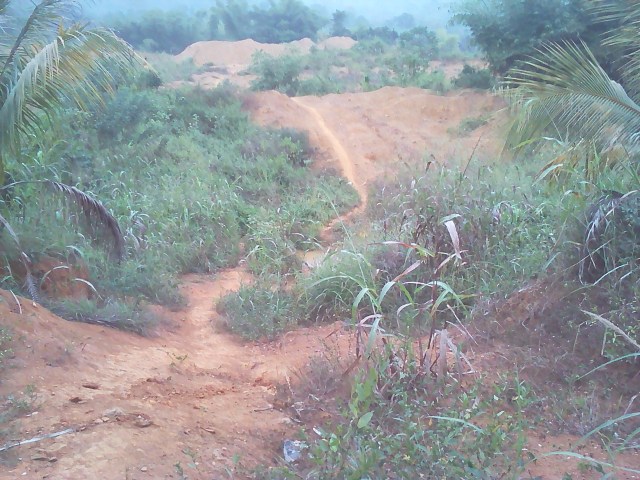
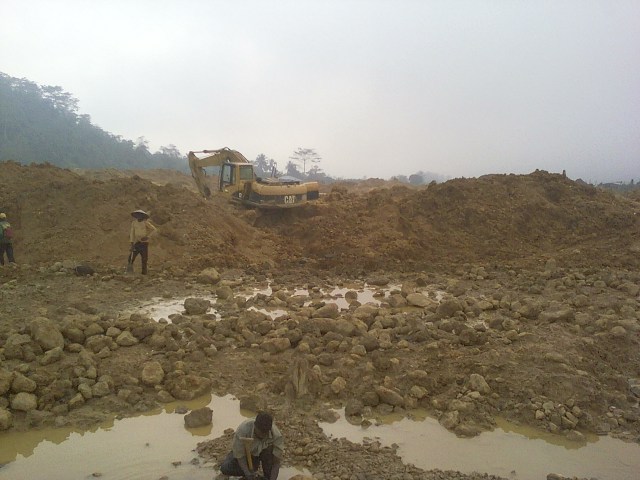
As a New Year dawns 2016, I decided to visit some of the towns and Villages specifically Afiasa and Apapam in the Kyebi Area in the Eastern region of Ghana. My expectations had been a reduced case of the destructions and menace of illegal mining activities in the region. It turned out ironically that “aluta continua”. Local men and women were busily excavating land and destroying forest and cocoa farms in search of Gold dusts. I do not intend to discuss the effects of illegal mining in this article but to urge us all to take responsibility of our environment because our natural resources is all we have.IMG_20160102_075350.jpg
Gold and all minerals in Ghana are precious and need to be mined to support our weakly economic. Of course we cannot sit on Gold and diamond to east sand. Note that in Ghana we are blessed with the prospect of minerals on every part of our land. The question however is that shall we overcome the cost of extraction and damage to the environment on mining in particular place in a particular manner? Simply, is such illegal mining profitable when you consider the damage to the environment?
Kofi Bonsu (actual name withheld) who works as a supervisor for a sponsor to a Galamsey operations remarked “Are you thinking of filling back land and planting trees? No way have you just taken your Gold and leave.” It is clear that there is no such thing as mining license and EPA Permits in their dictionary. This is how the Galamsey operations affect our natural resources.IMG_20160102_075355.jpg
The Minerals Commission offers license to qualified and responsible mining companies in order to control and guide the operations of mining in the country. It also ensures compliance with Ghana’s Mining and Mineral Laws and Regulation through effective monitoring. It is clear that the Mineral Commission is defunct in monitoring the activities of mining operations in Ghana. The Environmental Protection Agency and the Security Services of the country have their due responsibilities.
What ought we to do as individuals. We all have a duty to protect our natural resources. If you have any complaints or suspicious of any mining activity undertaken in your community, Immediately inform the authorities or the Mineral Commissions on hotlines:
030 2771318, 030 2779823.

Follow the link below for undercover videos of these operations.

Galamsey Operations in Kyebi Area Continue reading

Posted in Uncategorized | Leave a comment