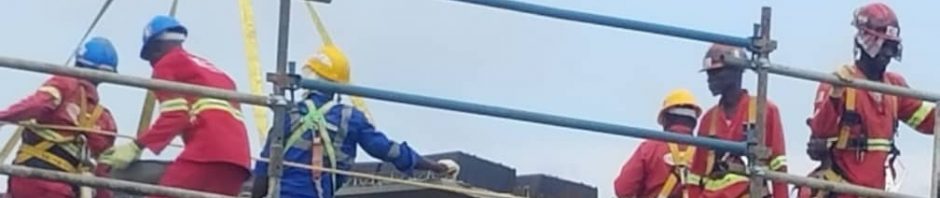
Video credit : Flame institute of fire and safety management
Falls
OSHA describes accidents involving falls as injuries sustained when dropping from a higher level to another below. This includes falling from stairs, roofs, upper floors, ladders, scaffolding, large stacks of materials, and more. The main reasons falling injuries occur are failure to mark hazards, nonuse of safety harnesses or lanyards, and ignored recommended safety protocols. Falls are presently the leading cause of catastrophic injury and death in the construction industry.
Examples of falls:
- Scaffolding collapse due to exceeding recommended weight limits
- Improper ladder usage
- Falling through open-sided or unsecured flooring
- Stumbling from stairs without guardrails
- Following through open skylights
- Slipping on unsecured roofing materials to the ground below
2. Caught-In or Caught-Between
Caught-in or caught-between injuries occur when a worker is caught between two heavy pieces of machinery or objects, or when clothing or body parts are caught in the moving parts of a machine. These injuries are nearly always devastating, often resulting in crushing, amputation, strangulation, or even death. Caught-in and caught-between injuries are the fourth most common catastrophic injury in construction and can often result in death.
Examples of caught-in/between injuries:
- Being caught in a soil trench cave-in
- Loose clothing, dangling articles, or body parts being pulled into power tools such as saws, drills, grinders, or sanders
- Working under a vehicle when loose clothing is caught in moving motor parts
- Crushed between a vehicle and a wall
- Crushed under a hydraulic truck frame as it is lowering
- Crushed under a collapsing, unsecured wall
- Caught between heavy sheets of metal when securing bands failed
3. Struck-By Injuries
Struck-by injuries are injuries in which a moving object strikes a person. As opposed to caught-in or caught-between injuries, these injuries are incurred by forcible contact or impact, not crushing or pinning. These injuries are usually the result of lack of training, ignorance of recommended safety measures, or PPE failure or nonuse. Struck-by injuries are the second leading cause of catastrophic injury and death for construction workers.
Examples of struck-by injuries:
- Struck by a moving vehicle
- Objects slipping from hands and falling
- Swinging or falling equipment
- Falling overhead materials
- Discharged nail from a nail gun
- Materials launched by a saw
- Flying debris from striking tools
4. Electrocutions
Electrocutions are defined as catastrophic injuries resulting from exposure to potentially lethal amounts of electrical energy. Electrical hazards are usually the result of worker miscommunication, lack of situational awareness, and PPE nonuse. While electricity-related injuries can vary in severity, it isn’t a risk to be taken lightly—it’s the third most common cause of construction workplace fatalities.
Examples of electrocutions:
- Relocating an aluminum ladder when it makes contact with overhead power lines
- Raised moving arms or baskets on heavy machinery coming into contact with power lines
- A coworker flipping the power on during electrical work
- Crossed wires during electrical service box installations
- Coming into contact with damaged wiring during construction
Credit: Cooney and Conway


 Grenotek Engineering Services