
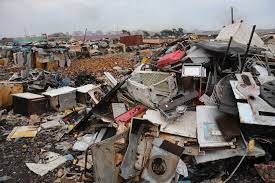
Photo credit: Bloomberg
Managing electronic waste (e-waste) in Ghana requires adherence to certain technical guidelines to minimize environmental impact and ensure safe disposal. In my previous article on e-waste,I featured the Agbogloshie e-waste dumpsite . In furtherance to this , in this short article, I will list some key points of focus including some scenarios for change and adaptation which will prevent the environmental pollution emanating from the dumping of e waste on landfill in Ghana inappropriately.Here are some key guidelines:
Segregation and Collection: Separate e-waste from other types of waste at the source to facilitate proper handling and disposal.Individuals and companies should not discard electronic waste together with other types of waste. These should be kept separately to be sold off or given to appropriate persons expertized in disposing off e-waste. A major concern is that many of the e-waste collected by our local scrap dealers end in drainage and on the streets. These scrap dealers dismantle the equipment to take the useful component and leave other components any where.Just imagine how appropriate it will be if a company upgrading its office computers instead of discarding old computers along with general waste, they designate collection bins specifically for e-waste. Ghanaians should also be educated on what constitutes e-waste, such as old computers, printers, and peripherals, and should be encouraged to deposit them separately.
Also e-waste should be stored in designated areas that are secure and protect against environmental hazards like moisture, heat, and fire. This will prevent soil contamination and subsequent water pollution of underground water systems as a result of direct deposition of metallic dissolved components into the soil where e-waste is stored. These will have a fire consequence on aquatic biodiversity typically at areas of dump sites close to river bodies. The contamination at the Agbogloshie e-waste site is a typical example of such a situation.
Transportation: Transport e-waste using authorized carriers to licensed recycling facilities or treatment centers.Consider a scenario where a recycling company specializes in e-waste disposal. They use specialized vehicles equipped with proper packaging materials and safety measures to transport collected e-waste from collection centers to recycling facilities.Approved refuse collection companies should consider investment in e-waste scrap collection from house to house and from companies in order to prevent unauthorized scrap dealers from inappropriately disposing off e- waste.
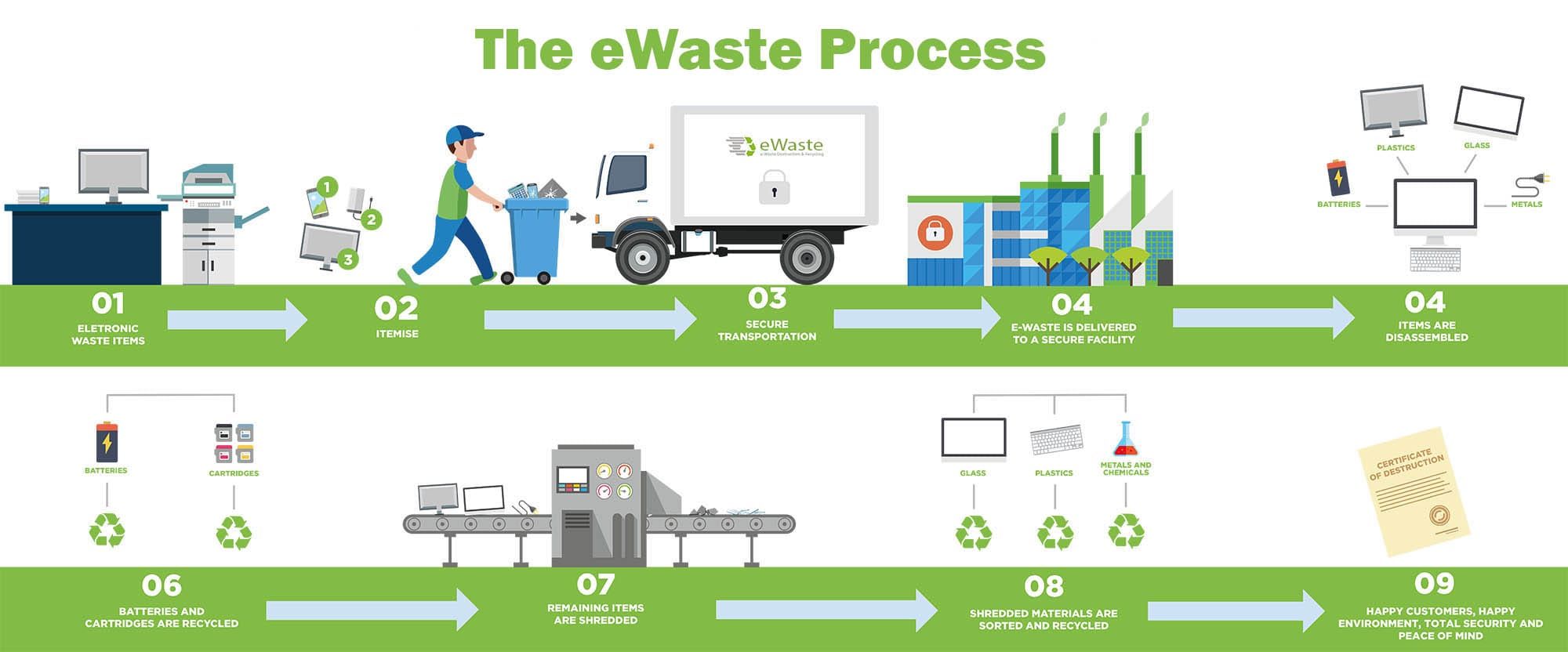
Photo Credit:ECS
Treatment and Recycling: Employ environmentally sound methods to recycle and treat e-waste, including dismantling, shredding, and recovery of valuable materials like metals, plastics, and glass. At the recycling facility, e-waste undergoes various treatment processes. For example, old computers are dismantled by trained technicians to separate components like metal casings, circuit boards, and cables. Valuable materials such as gold, silver, and copper are extracted through safe and efficient recycling techniques.
Hazardous Material Handling: Handle hazardous components such as batteries, mercury-containing lamps, and printed circuit boards separately and dispose of them according to regulations.Many electronic devices contain hazardous materials like lead, mercury, and cadmium. A scenario could involve a recycling facility equipped with specialized equipment and trained personnel to handle hazardous components safely. Batteries are removed and disposed of separately, while mercury-containing lamps are treated to extract mercury for proper disposal.
Data Security: Ensure data security and privacy by implementing procedures to erase or destroy sensitive data stored on electronic devices before recycling or disposal.Before recycling or refurbishing electronic devices, data security is paramount. A company upgrading its laptops ensures that all sensitive data stored on hard drives is securely erased using certified data wiping software or physically destroyed through shredding. This prevents the risk of data breaches and protects sensitive information. There have been several issues of leak audios and videos and personal information recently in the social media that resulted from the act of inappropriately discarding these electronic devices.
Compliance: Comply with local, national, and international regulations regarding e-waste management, including proper documentation and reporting.Individuals and corporate organizations must comply with local, national, and international regulations governing e-waste management. This includes obtaining necessary permits, adhering to waste disposal laws, and maintaining detailed records of e-waste collection, transportation, and disposal activities.
Public Awareness and Education: Thee public and stakeholders should be educated about the importance of responsible e-waste management and the potential environmental and health risks associated with improper disposal.Public awareness campaigns play a crucial role in promoting responsible e-waste management. Governments, NGOs, and businesses conduct outreach programs to educate the public about the environmental and health hazards of improper e-waste disposal. This encourages individuals to participate in e-waste recycling programs and make informed choices about electronics consumption.


 Grenotek Engineering Services