Are fossil fuels the new slavery, the new Jim Crow?
If you believe the dire predictions of world leaders and many top scientists, it’s hard not to conclude that the burning coal, oil and gas might even be worse. It is not just immoral; it poses an existential threat to life as we know it.
While you may be angry that President Donald Trump pulled us out of the Paris climate accord, you are probably horrified that the agreement is a symbolic gesture that will only slow the rise in greenhouse gas emissions. The inconvenient truth is that the best we could do collectively is not nearly enough to thwart what many see as a looming catastrophe.
What are people who know and care to do?
Our history offers some guidance. Slavery and Jim Crow were not just brutal practices – they were all-encompassing systems that implicated every non-black citizen. Even if one recognized them as evil, it was almost impossible to avoid complicity. That was the price society exacted of all born into it.
The late journalist and scholar Roger Wilkins addressed this moral prison in his insightful book, “Jefferson’s Pillow: The Founding Fathers and the Dilemma of Black Patriotism.” As an African-American, he was angry at those who declared that all men are created equal while enslaving his own ancestors.
Without forgiving them, Wilkins recognized that George Washington, Thomas Jefferson and James Madison would have had to turn their backs on all they knew and given up all they had to live up to those ideals. They “might have freed all their slaves in their lifetimes and thereby lost enough status, wealth, and leisure to be rendered anonymous,” he wrote. “But financially – and probably psychically as well – they were incapable of such sacrifices. … they had been shaped, like all of us, by inherited culture.”
A movement has been building in recent years to no longer honor those who participated in slavery and Jim Crow by razing their statues and erasing their names from boulevards and buildings. I have repeatedly called for the removal of the Confederate monument that towers before our state legislature in Raleigh.
But that effort points the finger outward; it doesn’t suggest how we might use that moral argument to examine our own lives in areas outside of race.
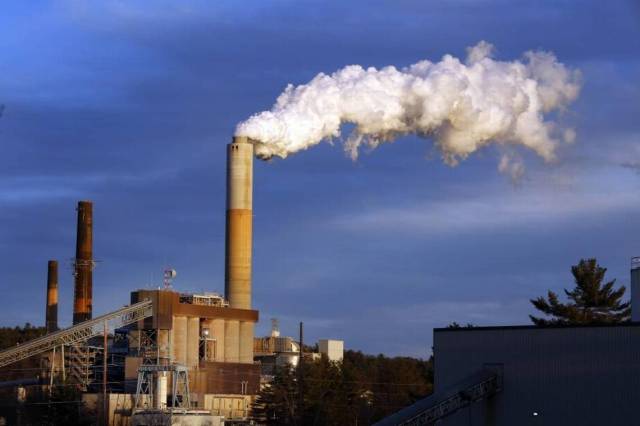
Fossil fuels shape our world just as surely as Jim Crow and other forms of systemic racism once defined America. Almost all we do, our ease and comfort, depends on them. They are both the immovable object and the irresistible force.
And yet, many believe they are leading toward unimaginable horrors. Wilkins anticipated this point when he wrote: “Privilege is addictive. The most natural thing in the world is for each human being to view the privilege he enjoys as, well, the most natural thing in the world.”
Our privilege is not realized through slavery or immoral laws that deny the humanity of others but through our cars, planes, air conditioners and factories mostly powered by fossil fuels.
It is clear that, at least in the short-term, our leaders are not going to take the action climate activists deem necessary. As a result, people who care deeply about this issue will be forced to participate in a form of slow-motion suicide.
If we can look at the past and ask why our ancestors didn’t do more to confront an acknowledged evil, how might we interrogate our own behavior?
Is it enough just to support the right policies? Are people living up to their values when they support bike lanes, but drive everywhere? When they rail against climate deniers but then fly hither and yon? When they build houses with bonus rooms and own summer homes?
Of course, the actions of a single individual will not make a bit of difference. Jefferson could have told himself the same thing if he ever thought about freeing his slaves.
But the only thing any of us can truly control is ourselves; the most valuable thing we have is our conscience.
That great American novel, “Adventures of Huckleberry Finn,” featured a decent protagonist born into a corrupt society. Huck remains a powerful example not because of what he said, but what he did to help Jim. That is the one true measure of every person


 Grenotek Engineering Services