As the President of the Republic of Ghana read his maiden state of the nation’s address, many Ghanaians looked up to major changes in two main sectors ,the financial and the power sector as those were the main campaign messages that won the presidency. Naturally we are more perturbed about what affects our immediate existence and typical of a Ghanaian campaign slogans” What affects my pockets wins my vote”. Meanwhile a more relevant and a cause to sustaining our power and economic sector is most often ignored and less attended to in the President’s state of the nation’s addresses. Notwithstanding, the success or failure of these sectors is dependent on the state of our environment. The effect of environmental degradation affects health, livelihoods and entrenches the poverty cycle.
In my opinion, the use of the Heritage fund for financing free SHS is susceptible to debate. Similarly, environmental degradation activities such as bushfires, deforestation and use of convention fuels lead to climate change which undermines the capacity of resource base for our future generations. It is therefore important that Ghanaians would seek to tasking politicians to provide sound environmental policies and actions in their manifestos as a sign of a political will because where there’s a will there’s a way .Indeed this is one area where most politicians agree on issues and share a common vision.
In this article, I will try to review on the state of environmental problems such as deforestation, mining, water, sanitation. These sub headings are picked from a broad array of environmental problems because they are common and prevalent to every Ghanaian.
Water and Sanitation
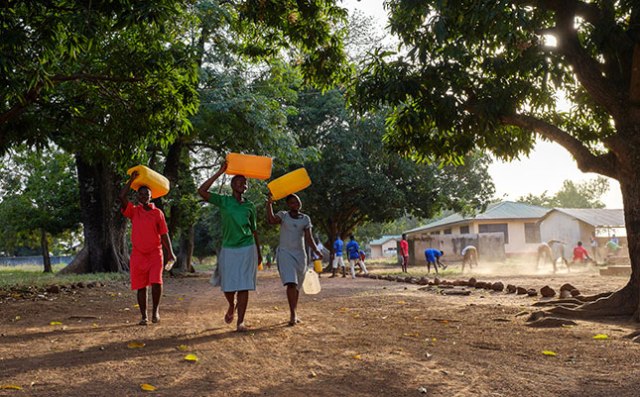
Exactly a year ago today, a major water crisis hit the nation particularly in the Nsawam areas and its environs. Worst affected areas in Ghana included Nsawam Adoagyiri, the Nkwanta North District, Kulungungu in the Upper East region, Ho and some coastal sections of the Western Region and Ningo Prampram where it was reported that students bathed with sea water.
Despite efforts to curb the situation through water development projects by the previous government, the situation is far from over. It seems the water crisis is a seasonal problem in our country.
On January 20th 2017, Citifmonline report by Frederick Awuni indicates a water crisis in the Upper East Region which severely affected The Upper East Regional Hospital, leaving patients to their fate in search for water for health care delivery.
The Korle Bu teaching hospital in Accra had its own fair share of the periodic problem. Water shortage hit the Neo natal Intensive Care Unit for over a week. This was a general problem around the Korle Bu and its environs. Similarly in this month, Parts of Sunyani, the Brong-Ahafo Regional capitals have been hit by serious water crisis and this is making things uncomfortable for many of the residents. The worst affected areas are Nkwabeng North and South, Penkwasi, New-Dormaa, SSNIT Residential and Airport Residential Areas .
Also in the Volta region, students of Mawuli Senior High School at Ho have been complaining about inadequate supply of food, water and electricity, as the school struggles to meet payment demands from their service providers. According to the students, they have been living without adequate potable water for the past four weeks, and survive on contaminated water from the school’s well and dugouts. Really these problems are far from over and needs to be curtailed. This is the true state of Ghana’s environment.
Sanitation and waste management is another area of concern in Ghana particularly the urban areas of Accra and Kumasi. Three out of five Ghanaians practice open defecation. It could take 500 years to eliminate the practice due to the slow pace at which strategies, laws and interventions are being implemented as opined by the Chief Officer at the Water, Sanitation and Hygiene, WASH, Unit of UNICEF Ghana, David Duncan.
The practice of open defecation is a key sanitation challenge because people do not have access to key basic facilities. According to Water aid Ghana, out of the 27 million populations; 22 million people don’t have access to improved sanitation in Ghana. Over 3 million people in Ghana lack access to an improved water source and over 2,100 Ghanaian children under five years old die annually from diarrheal diseases caused by poor water and sanitation. 80% of all diseases in Ghana are caused by unsafe water and poor sanitation. This is the true state of Ghana’s environment.

Our problems have been primarily caused by weak environmental sanitation monitoring and enforcement systems as well as rapid urbanization and population pressure.
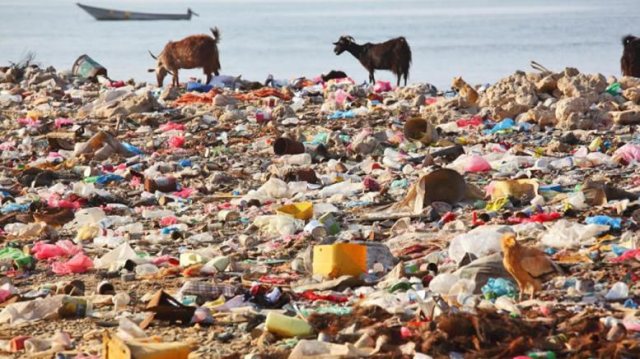
Human activities such as mining, illicit disposal of plastic waste into drains, open defecation which must be managed to prevent environmental and health problems. Policies for the establishment of waste water treatment plants in urban districts (One district one plant) should be encouraged.
Deforestation and Mining
The illegal act of felling trees has become one of the commonest offences in Ghana today. According The Ghana Millennium Development Goals 2015 report, in 1990, Ghana had a total forest area of 9.2 million hectares made up of 1.79 million hectares of close forest and 7.4 million hectares of open forest. It said Ghana lost 2.51 million hectares (or 33.70 per cent) of its forest cover between 1990 and 2010, representing a 2.03 per cent average annual loss over the period. The annual rate of deforestation for 2015 and 2016 is estimated at 1.40 percent whereas efforts of afforestation through tree planting have been very slow.
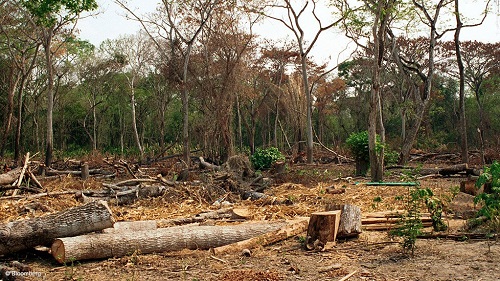
The principal drivers of deforestation and forest degradation are (agricultural expansion 50%), wood harvesting (35%), population and development pressures (10%), mining and mineral exploitation (5%) according to the Forestry Commission. Additionally, weak enforcement and inadequate community forestry involvement is a key factor to the woes of the forest degradation.
Strategic forest management policies are relevant in curbing this menace. In 2016, the Forestry Commission launched its Forestry plantation policy strategy for 2016 to 2014. The GFPS advocates the incorporation of food crops during the establishment of forest plantations (Taungya System) and promotion of under-storey planting or alternative livelihood activities (e.g. cultivation of spices and medicinal plants, apiculture, etc.) to provide additional short-term income to improve livelihoods and enhance household incomes. It is projected that a total of 3,039,500 jobs will be created over the 25-year strategy period. Another key development of the Forestry commission to arrest the situation is the REDD+ Strategic policy for 2016. In spite of these efforts a key set back factor to accomplish these policies is inadequate finance for implementation of programs. For instance the total cost of implementing the GFPS over the 25-year period (2016 – 2040) is US$4,064,389,800.Government (GoG) funding is expected to come from direct budget support, levies, pension funds, and contributions from development partners (DPs).
Meanwhile an illegal mining activity in the country which poses a major threat to our environment has not been properly handled. It is for the obvious reasons of alleged involvement of many politicians and chiefs in the act. This is the true state of Ghana’s environment. About 13% of land in Ghana had been deforested as a result of small-scale mining, both legal and otherwise, according to a January 2015 report from the University of New England. Galamsey has caused widespread destruction of farms and farmlands, water bodies, flora and fauna and the unregulated use of dangerous chemicals such as cyanide. The operations of illegal small scale miners have left several acres of land across the country, especially in mining areas desolate and degraded, leaving in their wake trenches and holes which have become death traps. Water bodies close by that serve as a source of drinking water used for other domestic use for communities downstream suffer massively from pollution. For instance, the Birim and Densu rivers in the Eastern region of Ghana which serve as a source of drinking water for several communities have been severely affected by small-scale mining activities.

In the foregoing paragraphs, the environmental challenges that confront us as a country and extension, the world has been highlighted. We at Grenotek energy and environmental services believe that one cannot expect perfection from an imperfect process where imperfect people are involved and that complaining is an easy thing to do. In our candid opinion, we need to go beyond identifying problems of the environment and offer pragmatic solutions. We believe that advocacy to bringing policies that can proactively solve the myriads of environmental problems identified must be a major step. And in this we are prepared to work with government to bring this to reality. It is our fervent hope that all stakeholders of making the environment safe will come on board to make the call of the president H.E. Akuffo-Addo on making the environment safe a reality for the benefit of us and generations to come.
Grenotek Team February 21, 2017


 Grenotek Engineering Services