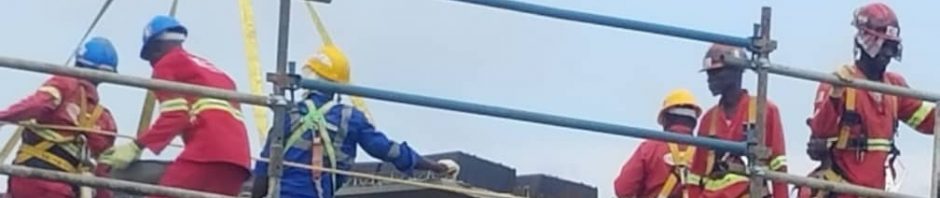
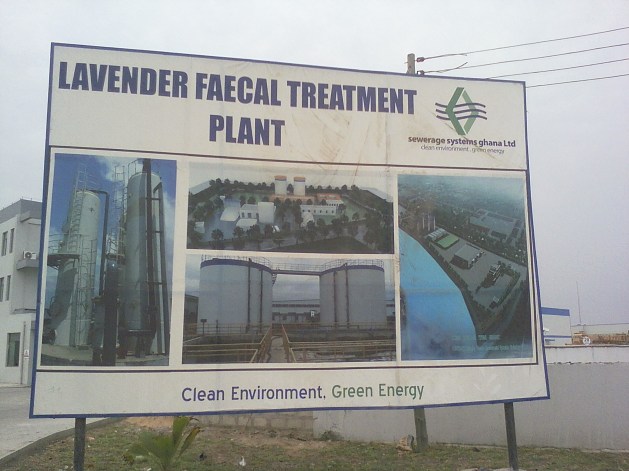
Residents and commuters along the Korle lagoon will soon enjoy new breath of fresh air as the new lavender faecal treatment plant is set to begin operations this week.
Exif_JPEG_420
Exif_JPEG_420

Prior to this installation, lavender hill beach served a s a dumping site for all liquid waste in the Accra Metropolitan Area. The liquid water is directly emptied into the beach without any treatment.
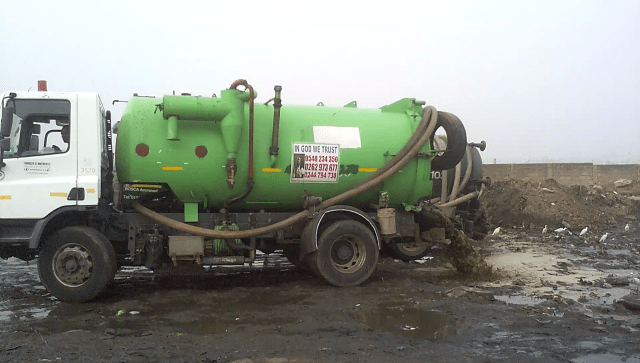
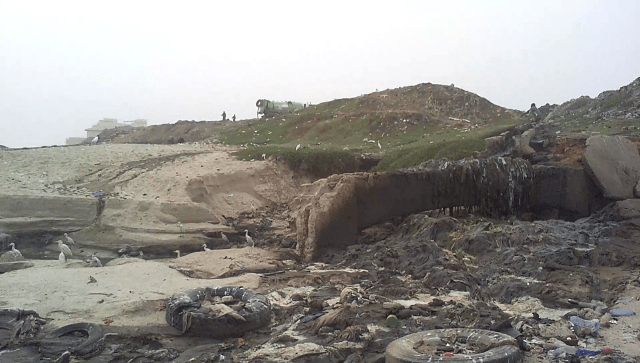
These actions have had a negative impact o the populace living around the environs. It has also affected marine life and destroyed aquatic habitat for many organisms. Although the new lavender faecal treatment plant was commissioned on 25th November 2016, It has since not been operational. Sewage is still being dumped directly into the sea. Our visit to the lavender hill on 7th January 2017 attests to this fact. Follow the link to watch this video
Meanwhile, starting this week, a new modern and lawful disposal of sewage waste will be operational as the new lavender faecal treatment plant starts it full operations.
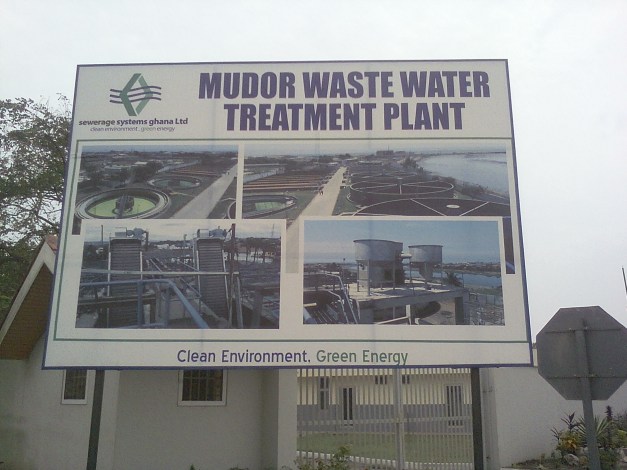
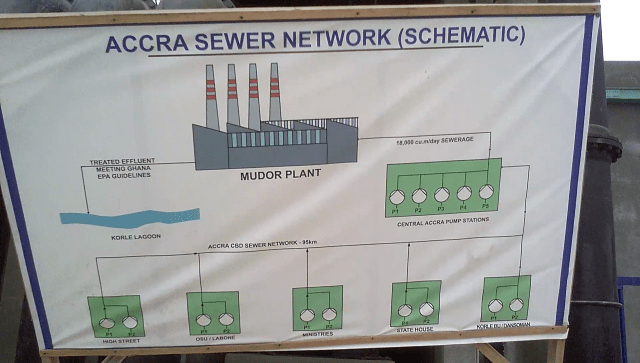
The entire project which commenced about three years ago is being undertaken by Sewerage Systems Ghana Limited and their Chinese contractors. The estimated cost of the project is about USD 25 million. The project is about 90% completion. The project involves the construction of two major sewerage treatment plants; the lavender faecal treatment plant and the mudor waste water treatment plant

Exif_JPEG_420

Exif_JPEG_420
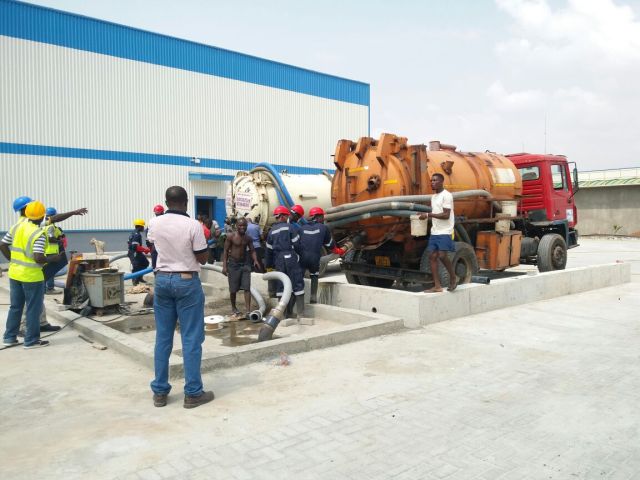
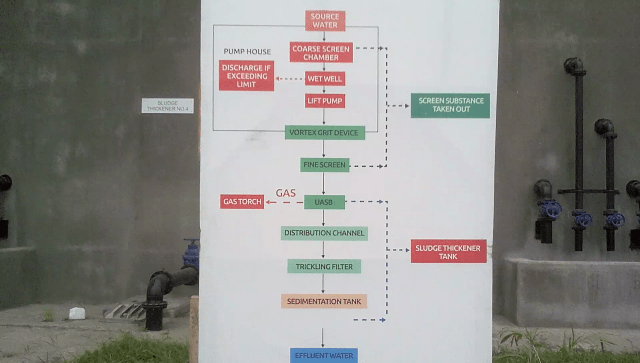
The first plant i.e. lavender faecal treatment plant is complete and set to start its operations this week. Over the weekend, it received over 120 liquid waste tankers for treatment. The treatment plant has a current operating capacity of 2,400m3/day. The plant consists of a primary treatment stage which includes screening, settling of solid particles and sludge dewatering. A secondary treatment stage will involve anaerobic digestion, anoxic-oxic digestion and secondary settling. The final stage will involve ultraviolet disinfection, Biogas utilization and digested sludge dewatering.After the final stage, by product of organic solids will be used as manure whereas effluent water will be treated to standard and reused in the plant and watering of lawns.
How the lavender sewage treatment plant works
The basic function of wastewater treatment is to speed up the natural processes by which water is purified. There are two basic stages in the treatment of wastes, primary and secondary, which are outlined below. In the primary stage, solids are allowed to settle and removed from wastewater. The secondary stage uses biological processes to further purify wastewater. Sometimes, these stages are combined into one operation.
Primary Treatment
As sewage enters a plant for treatment, it flows through a screen, which removes large floating objects such as rags and sticks that might clog pipes or damage equipment. After sewage has been screened, it passes into a grit chamber, where cylinders, sand, and small stones settle to the bottom. A grit chamber is particularly important in communities with combined sewer systems where sand or gravel may wash into sewers along with storm water. After screening is completed and grit has been removed, sewage still contains organic and inorganic matter along with other suspended solids.
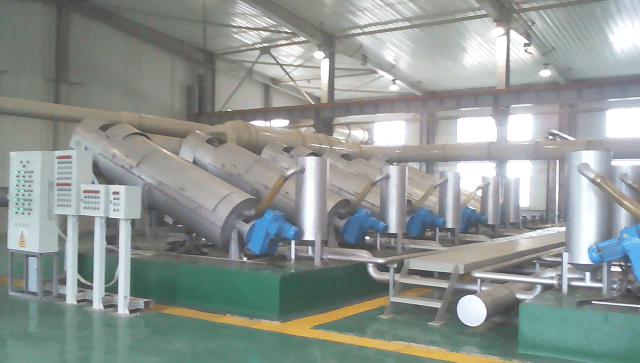
These solids are minute particles that can be removed from sewage in a sedimentation tank. When the speed of the flow through one of these tanks is reduced, the suspended solids will gradually sink to the bottom, where they form a mass of solids called raw primary bio solids formerly sludge). Bio-solids are usually removed from tanks by pumping, after which it may be further treated for use as a fertilizer, or disposed of in a land fill or incinerated.
Secondary Treatment
The secondary stage of treatment removes about 85 percent of the organic matter in sewage by making use of the bacteria in it. The principal secondary treatment techniques used in secondary treatment are the trickling filter and the activated sludge process. After effluent leaves the sedimentation tank in the primary stage it flows or is pumped to a facility using one or the other of these processes. A trickling filter is simply a bed of stones from three to six feet deep through which sewage passes.
More recently, interlocking pieces of corrugated plastic or other synthetic media have also been used in trickling beds. Bacteria gather and multiply on these stones until they can consume most of the organic matter. The cleaner water trickles out through pipes for further treatment. From a trickling filter, the partially treated sewage flows to another sedimentation tank to remove excess bacteria. The trend today is towards the use of the activated sludge process instead of trickling filters.
Exif_JPEG_420
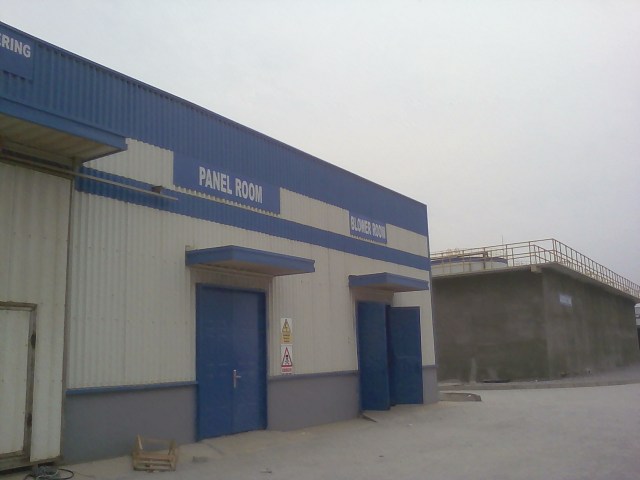
The activated sludge process speeds up the work of the bacteria by bringing air and sludge heavily laden with bacteria into close contact with sewage. After the sewage leaves the settling tank in the primary stage, it is pumped into an aeration tank, where it is mixed with air and sludge loaded with bacteria and allowed to remain for several hours.
During this time, the bacteria break down the organic matter into harmless by-products. The sludge, now activated with additional billions of bacteria and other tiny organisms, can be used again by returning it to the aeration tank for mixing with air and new sewage. From the aeration tank, the partially treated sewage flows to another sedimentation tank for removal of excess bacteria.
To complete secondary treatment, effluent from the sedimentation tank is usually disinfected with chlorine before being discharged into receiving waters.
Chlorine is fed into the water to kill pathogenic bacteria, and to reduce odor. Done properly, chlorination will kill more than 99 percent of the harmful bacteria in an effluent. Some municipalities now manufacture chlorine solution on site to avoid transporting and storing large amounts of chlorine, sometimes in a gaseous form. Many states now require the removal of excess chlorine before discharge to surface waters by a process called dechlorination. Alternatives to chlorine disinfection, such as ultraviolet light or ozone, are also being used in situations where chlorine in treated sewage effluents may be harmful to fish and other aquatic life.

Exif_JPEG_420


 Grenotek Engineering Services